Fir’awn is a name in the Qurʾān, how we know it’s a name and not a title: titles usually have the definitive article ٱل (al-) which means “The”, for example the titles belong to Allah all have the definitive article ٱل (al-) – (ٱلرَّحِيم = The Merciful), also, the Qurʾān says ʾĀlu Fir’awn (ءَالُ فِرعَون) which means Family of Fir’awn, and in the Qurʾān, the word ʾĀl is only used with names, for example ʾĀla ʿImrān (ءَالَ عِمرٰن), lastly, Fir’awn is mentioned in a list of other proper names basically Hāmān and Qārūn.
Also, regarding the name Hāmān itself, the Qurʾān says هٰمٰن and not حامان, they clearly aren’t the same. The first is an arabian-origin name, and the latter is a coptic-origin *title (which is transliterated for those reading this to Arabic so they can understand the difference). In reality, the Western Egyptologists are the ones who have falsely articulated “Ḥam nata tapiy amana” as “Ḥaman” and then claimed that Hāmān is an arabization which there is no evidence for, since Ḥaman in Coptic initially starts with the consonantal letter that is equivalent to ح (Ḥ) in Arabic, while Hāmān in the Qurʾān begins with a different letter that is ها (H), thus هٰمٰن and not حَمَن (or حامان).
So the analogy of using Fir’awn and Pharaoh, to say that it’s completely fine to identify Qurʾānic هٰمٰن as Coptic حامان – is a false analogy, because Fir’awn and Pharaoh are completely different too, and used differently.
There is very clear evidence that Fir’awn was indeed the personal name of the tyrannical figure who persecuted Nabī Mūsā and Banī Isrāʾīl Israelites. Had the term been a title, it would have been mentioned in the form of al-Fir’awn, (meaning “the Pharaoh”). The fact is, nowhere in the Qurʾān does it appear with the prefix “al-”. Let’s look at the following examples:
وَقَالَتِ ٱمْرَأَتُ فِرْعَوْنَ قُرَّتُ عَيْنٍ لِّى وَلَكَ لَا تَقْتُلُوهُ عَسَىٰٓ أَن يَنفَعَنَآ أَوْ نَتَّخِذَهُۥ وَلَدًا وَهُمْ لَا يَشْعُرُونَ
And the wife of Fir’awn said, “[He will be] a comfort of the eye for me and for you. Do not kill him; perhaps he may benefit us, or we may adopt him as a son.” And they perceived not.
Al Qaṣaṣ (28), ʾĀyah 9
The phrase “wife of Fir’awn” is no different than “wife of Nūḥ” (Noah), or “wife of Lūṭ” (Lot), as can be seen in the following passage:
ضَرَبَ ٱللَّـهُ مَثَلًا لِّلَّذِينَ كَفَرُوا۟ ٱمْرَأَتَ نُوحٍ وَٱمْرَأَتَ لُوطٍ كَانَتَا تَحْتَ عَبْدَيْنِ مِنْ عِبَادِنَا صَـٰلِحَيْنِ فَخَانَتَاهُمَا فَلَمْ يُغْنِيَا عَنْهُمَا مِنَ ٱللَّـهِ شَيْـًٔا وَقِيلَ ٱدْخُلَا ٱلنَّارَ مَعَ ٱلدَّٰخِلِينَ وَضَرَبَ ٱللَّـهُ مَثَلًا لِّلَّذِينَ ءَامَنُوا۟ ٱمْرَأَتَ فِرْعَوْنَ إِذْ قَالَتْ رَبِّ ٱبْنِ لِى عِندَكَ بَيْتًا فِى ٱلْجَنَّةِ وَنَجِّنِى مِن فِرْعَوْنَ وَعَمَلِهِۦ وَنَجِّنِى مِنَ ٱلْقَوْمِ ٱلظَّـٰلِمِينَ
Allah presents an example of those who disbelieved: the wife of Nūḥ and the wife of Lūṭ. They were under two of our righteous servants but betrayed them, so those prophets did not avail them from Allah at all, and it was said, “Enter the Fire with those who enter.” And Allah presents an example of those who believed: the wife of Fir’awn, when she said, “My Lord, build for me near You a house in Paradise and save me from Pharaoh and his deeds and save me from the wrongdoing people.”
At-Taḥrīm (66), ʾĀyāt 10-11
The fact is that every Muslim knows “Nūḥ” and “Lūṭ” to be the names of two of Allah’s messengers. Yet when Fir’awn is mentioned, they automatically assume the term to be a title, because of the pre-conceived ideas that they have inherited and can’t seem to cast aside.
The Qur’ān also tells us how Nabī Mūsā in his infancy, was picked up from the yamm by members of Fir’awn’s household (ʾĀlu Fir’awn):
فَٱلْتَقَطَهُۥٓ ءَالُ فِرْعَوْنَ لِيَكُونَ لَهُمْ عَدُوًّا وَحَزَنًا إِنَّ فِرْعَوْنَ وَهَـٰمَـٰنَ وَجُنُودَهُمَا كَانُوا۟ خَـٰطِـِٔينَ
And the family of Fir’awn (ʾĀlu Fir’awn) picked him up [out of the river] so that he would become to them an enemy and a [cause of] grief. Indeed, Fir’awn and Hāmān and their soldiers were deliberate sinners.
Al Qaṣaṣ (28), ʾĀyah 8
(ʾĀl [ءَال] ≠ Al- [ٱل], ʾĀl = Family, Al- = The)
In their everyday prayers and supplications to Allah, the traditional populace use the exact same expression in relation to Nabī Ibrāhīm and Nabī Muḥammad, without even being aware of it. They pray to Allah to send “blessings” upon the family (household) of Muḥammad just as He had done so for the family (household) of Ibrāhīm. They know for a fact that “Muḥammad” and “Ibrāhīm” are names; yet somehow many believe Fir’awn is a title. Further evidence of for this can be seen when Nabī Mūsā confronts Fir’awn directly, where it is very clear that the Nabī of Banī Isrāʾīl was calling the tyrant by his personal name, not his title:
وَقَالَ مُوسَىٰ يَـٰفِرْعَوْنُ إِنِّى رَسُولٌ مِّن رَّبِّ ٱلْعَـٰلَمِينَ
And Mūsā said, “O Fir’awn, I am a messenger from the Lord of the worlds
Al Aʿrāf (7), ʾĀyah 104
Qārūn and Hāmān which are both personal names are mentioned alongside Fir’awn:
وَلَقَدْ أَرْسَلْنَا مُوسَىٰ بِـَٔايَـٰتِنَا وَسُلْطَـٰنٍ مُّبِينٍ إِلَىٰ فِرْعَوْنَ وَهَـٰمَـٰنَ وَقَـٰرُونَ فَقَالُوا۟ سَـٰحِرٌ كَذَّابٌ
And we did certainly send Mūsā with our signs and a clear authority To Fir’awn and Hāmān and Qārūn; but they said, “[He is] a magician and a liar.”
Al Ghāfir (40), ʾĀyāt 23-24
Mentioning two personal names in the same verse and same context alongside a title is both logically and linguistically unsound. For example, if we say: “Tom, Jake, and King are walking in the castle garden”, it would seem that “King” is a personal name. If it was a title, the sentence would have to be stated as such: “Tom, Jake and the King are walking in the castle garden”. By this very same logic, if Fir’awn was a title then it would not appear in the same sentence with two personal names (Hāmān and Qārūn) without the prefix “al-” (the).
The opinion claiming Fir’awn to be a title can’t stand in the face of the Qurʾānic logic nor with the clear context of its verses nor is it supported by any physical or archeological evidence. Truthfully, Fir’awn is an Arabic name, since the Qurʾān is in clear Arabic, it is not a Coptic name, and is still known today – as a family name especially in Arab countries like Saudi Arabia and Yemen. And the Qurʾān which is a clear Arabic book names only one tyrant by that name. There’s no such thing as Farāʿina in the plural. Any claim otherwise is the result of a great historical forgery by the Biblical orientalist historians who attempt to culturally appropriate the Qurʾān.
Many people who proclaim to believe that Fir’awn in the Qurʾān is Ramesses II. However, this results in contradiction.
The Qurʾān says that the works of Fir’awn were destroyed in verse 7:137 as follows:
وَأَوْرَثْنَا ٱلْقَوْمَ ٱلَّذِينَ كَانُوا۟ يُسْتَضْعَفُونَ مَشَـٰرِقَ ٱلْأَرْضِ وَمَغَـٰرِبَهَا ٱلَّتِى بَـٰرَكْنَا فِيهَا وَتَمَّتْ كَلِمَتُ رَبِّكَ ٱلْحُسْنَىٰ عَلَىٰ بَنِىٓ إِسْرَٰٓءِيلَ بِمَا صَبَرُوا۟ وَدَمَّرْنَا مَا كَانَ يَصْنَعُ فِرْعَوْنُ وَقَوْمُهُۥ وَمَا كَانُوا۟ يَعْرِشُونَ
And we caused the people who had been oppressed to inherit the eastern regions of the land and the western ones, which we had blessed. And the good word of your Lord was fulfilled for the Children of Israel because of what they had patiently endured. And we destroyed [all] that Fir’awn and his people were producing and what they had been building.
Al Aʿrāf (7), ʾĀyah 137
[The attached image is the Bible, it claims Egypt was destroyed, but Egypt here is a mistranslation of Mizraim, so really it’s claiming Mizraim was destroyed. So Christians can’t deny it either that Allah’s Angels did destroy the works of Fir’awn and his people, since it’s in their own Bible too]
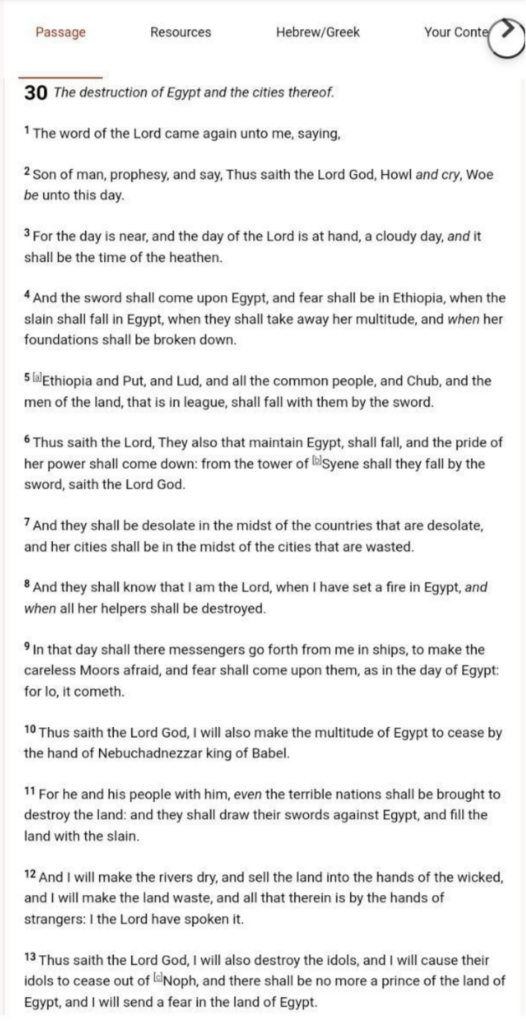
JOEL FORMAN – THE USE OF THE TERM “PHARAOH” IN THE BIBLE
The kings of Egypt were not originally called pharaohs by the ancient Egyptians. In the late First Dynasty, the term used was nesu-bit, referring to the king, with the additional idea that the king was a combination of divine and mortal. The term “pharaoh” for the king of Egypt developed over time, and was also used by the Hebrews and Greeks to describe the Egyptian ruler. Today, we commonly use the term “pharaoh” with reference to the kings of Ancient Egypt, including the Hyksos and Ptolemaic rulers, but usually not the Persian rulers, although many of them did have a formal Egyptian title manufactured for themselves. In Ancient Egypt, the term “pharaoh” was not originally a royal title. Translated literally, the earliest meaning of the Egyptian word per-o was “great house”, that is the palace or residence of the king and his administration. This usage is found as early as 2500 BCE. The term “pharaoh” referred to the ordinances and commands the king issued in his administration, but not to the person of the king himself.
The following are translations of several cartouches as seen on the pyramid murals, all that mention the king. You’ll see that the cartouches have two words in common: Hor (in relation to Horus-Ra one of their main deities) and Teti which is the title of the king, included in this are the English translations and the transliteration which is the actual pronunciation in the parentheses.
Cartouche 563/A:
“The mouth of the King is as incense, and the lips of the King are as myrrh” (djed merdu re en teti em senetjer sepeti teti em onetiu).
Cartouche 563/B:
“Descend, O King, to the field of your mate, Ka. To the field of your servants” (hai teti em sekhet ka eke er sekhet hetep).
Cartouche 563/C:
“The food of the **King is like the food on the ship of the god” (noret khefat net teti mi netjer depet).
Cartouche 564/A:
“The reign of the King is more than a year, and his servants more plenty than the Nile” (onekh teti ir renepet aut teti er hep).
Cartouche 609/A:
“O, King Osir, rise. Hor has come, and He calls you among the gods” (djed merdu usir teti pu oho ere k heru ip ef tju em o netjeru en tju heru).
Is the word pr-aa on any of those royal cartouches? Clearly not.
If Siamun is indeed the first King to be referred to as Pharaoh using it as a personal title, then it still does not necessarily prove that Ramesses held the same title, particularly in the Biblical narrative, as this would conflict with the belief that Ramesses was Pharaoh, given that Ramesses existed prior to King Siamun when Pharaoh was not yet commonly used by Egyptians as a personal designation.
It is known that in the Bible, the term Pharaoh is employed as a title for all rulers of Egypt but with a different connotation than how it was used by the Egyptians. This distinction arises from the timing of the Bible’s authorship post the Babylonian exile, following Siamun’s reign, where the Jewish people regarded all Egyptian rulers as Pharaoh denoting the King or Monarch of Egypt, analogous to our use of the term “Kings” despite it not being a formal Egyptian title. Notably, it is linguistically inaccurate to claim that all Egyptian rulers referred to themselves as Pharaohs, as per historical context. If Siamun truly was the first to be personally designated Pharaoh, then it follows that preceding Egyptian Monarchs, including Ramesses, were not addressed as Pharaoh by their own people and did not address themselves as Pharaoh.
In regards to the body of Ramesses itself.
Sahar N. Saleem is an Egyptian Neuroradiologist and the Professor of Radiology at Cario University and specialized in archeao-paleo-radiology and the co- author of “Scanning the Pharaohs: CT Imaging of the New Kingdom Royal Mummies” with Zahi Hawass. Sahar said “The ancient Egyptian history could not be correlated with the messengers of God stories in Quran or Bible. Scientifically it is not possible to indicate drowning as a cause of death in mummies. Presence of salt on the mummies is the normal as using Natron salt was an essential step in mummification. The age of Ramesses II at death historically and also by CT is estimated to be about 90 years. He had severe kyphosis and Diffuse idiopathic skeletal hyperostosis (DISH) in the spine it is a type of arthritis- as evident in CT. So, no way Ramesses II could ride a chariot or even travel for that long distance. Merenptah (Ramesses II’s son and his successor) was proposed as a candidate of exodus Pharaoh, but the only evidence was salt on his skin. This is a comment I wrote in reply to a Facebook post with a false data about Bucaille and his relation with the mummy of Ramesses II” (S. Saleem, Personal communication, September 5, 2019).
Sahar Said too “Bucaille was not a surgeon, but a gastroenterologist. He requested that the mummy of Ramses II be examined in Cairo in the seventies, but he was not allowed, but rather that Egyptian Scientists examined it in the Egyptian Museum. No autopsy was performed on the mummy, according to the testimony of Dr. Gamal Mokhtar, the head of the Egyptian Antiquities Authority at the time. The mummy was sent to Paris for treatment (i.e. to stop tissue decomposition). The mummy was not received by the French president at the airport, as some claim, but by the French Minister of Higher Education. And Bucaille did not participate in the examination and was not among the members of the French team. And the mummy was never dissected in Paris. Ramses II is not an Exodus pharaoh. Because his age at death was about 87 years, and he was suffering from a curvature of the back and severe stubbing that would never have enabled him to drive a chariot, or even feel the hardship of going out. The salt in the body is an original way that the old Egyptians used to do it during mummification and there is no evidence in any mummy that this mummy death was by drowning. As for the story of Bucaille’s Islam, there is no actual evidence for it, and there is no documented video with a statement or declaration of his conversion to Islam”.
The following are tables that show the names of the rulers of ancient Egypt and their given titles that are shown in the hieroglyphic inscriptions on their tombs and the year of their rule:
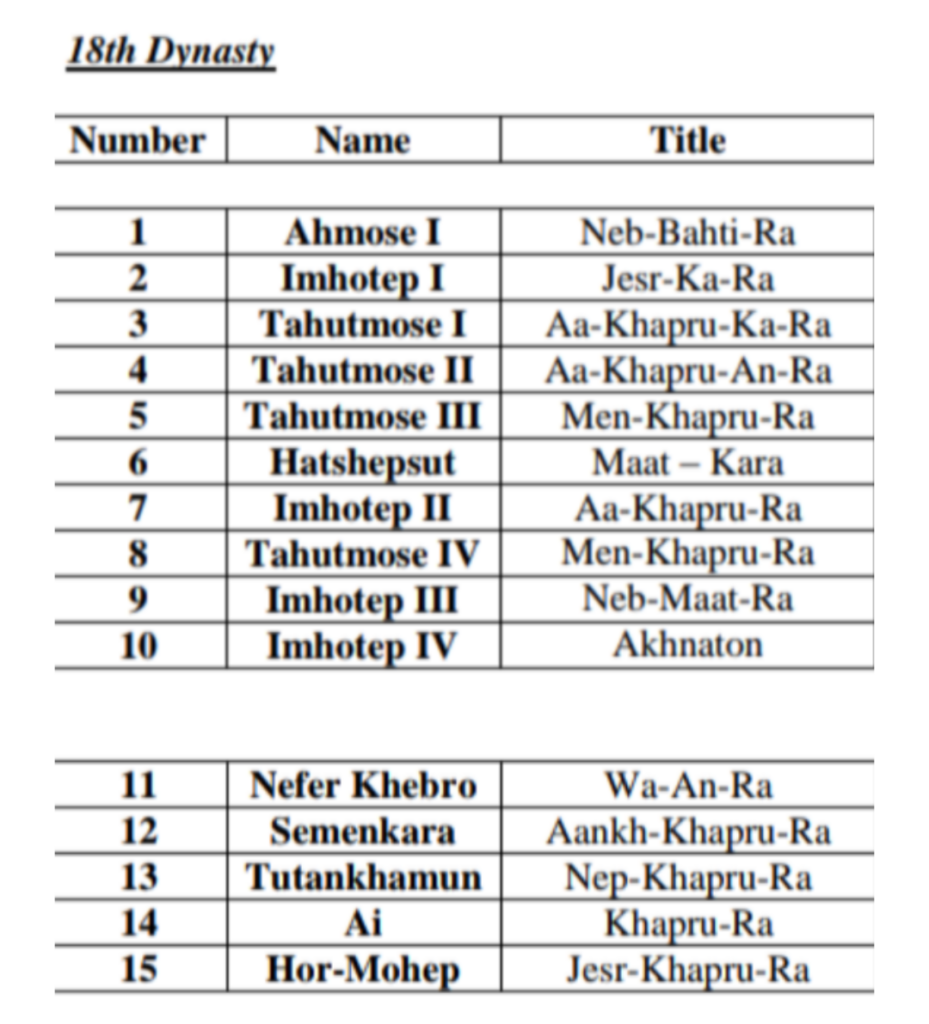
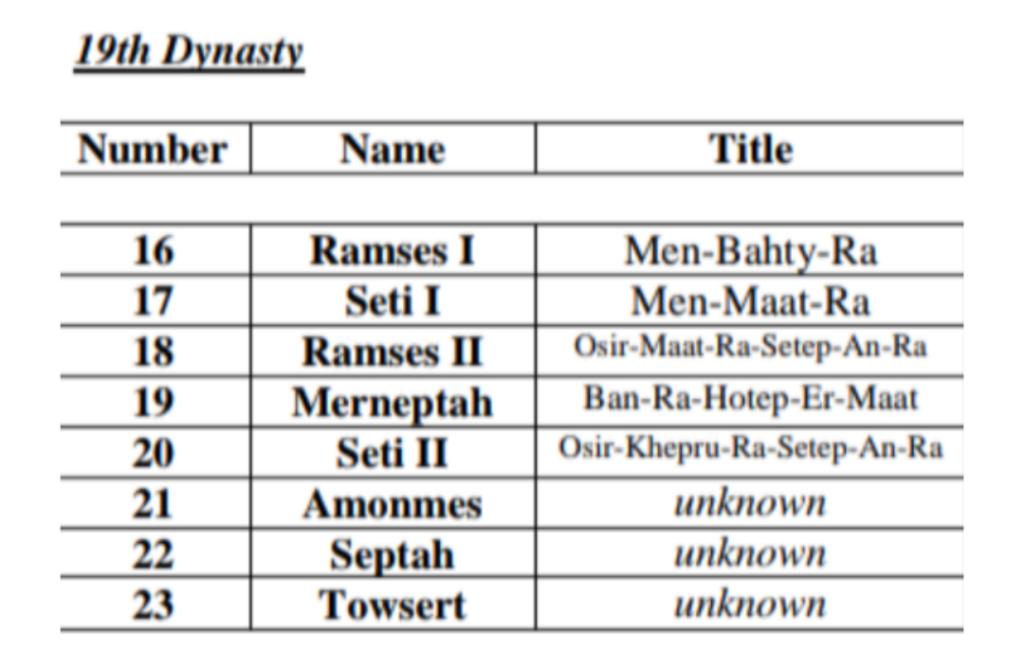
Nothing in the above list of names or titles indicates anything that even remotely resembles the word Fir’awn. None of the names or titles are made into make it into Fir’awn.
Ramesses’ given title is Osir-Maat-Ra-Setep-An-Ra, it has nothing that resembles the term Fir’awn.
The first part of the above video is about the Ascension inscription. The next part is about Qurʾān using Malik (meaning King/Ruler) as a title for the King of Egypt at the time of Yūsuf vs the Bible using Pharaoh for all the Kings including the King in Yūsuf’s story and the King in Mūsā’s story, they argue that:
“the Bible is inaccurate because it calls the King of Yūsuf’s era a Pharaoh and that Pharaoh was used as a title for Kings of Egypt much later, just before the birth of Mūsā, and that it was already in use as title by the time Mūsā was born, therefore the Qurʾān gets it right by calling the King of Yūsuf’s era a Malik and the King of Mūsā’s era a Fir’awn (which they believe is arabization of the coptic title Pharaoh and hence has the same meaning, a false belief).” (not a direct quote)
However, this is actually a non-argument, because the truth is that none of the Kings of Egypt ever adopted Pharaoh (pr-aa) as a personal title, none of the Kings of the New Kingdom era, and the Qurʾān uses Fir’awn for the King of Mūsā’s era, and the Qurʾān treats it as a proper name than a title, even to the point that the Qurʾān is the oldest source that actually mentions this name in its current spelling (فِرْعَوْن); and since the Bible is in fact a fairly recent fabrication, the title Pharaoh (pr-aa) was already being used by Egyptologists and historians for all the Kings of Egypt that they found.
The Kings from the Old Kingdom, they simply referred to them as Pharaohs too in their research, so it makes sense why the Bible, which is also fairly recent, uses Pharaoh as a title for all Kings of Egypt, because the title Pharaoh had already become a cognate to King and lost its original meaning of “Great House” by the time the Bible was written.
Regarding the alleged connection between the weeping sky hieroglyph and Fir’awn in the Qurʾān, this interpretation is problematic for several reasons.
The Qurʾān states in verse 7:137 that everything built by Fir’awn and his people was completely destroyed:
وَأَوْرَثْنَا ٱلْقَوْمَ ٱلَّذِينَ كَانُوا۟ يُسْتَضْعَفُونَ مَشَـٰرِقَ ٱلْأَرْضِ وَمَغَـٰرِبَهَا ٱلَّتِى بَـٰرَكْنَا فِيهَا وَتَمَّتْ كَلِمَتُ رَبِّكَ ٱلْحُسْنَىٰ عَلَىٰ بَنِىٓ إِسْرَٰٓءِيلَ بِمَا صَبَرُوا۟ وَدَمَّرْنَا مَا كَانَ يَصْنَعُ فِرْعَوْنُ وَقَوْمُهُۥ وَمَا كَانُوا۟ يَعْرِشُونَ
And we caused the people who had been oppressed to inherit the eastern regions of the land and the western ones, which we had blessed. And the good word of your Lord was fulfilled for the Children of Israel because of what they had patiently endured. And we destroyed [all] that Fir’awn and his people were producing and what they had been building.
Al Aʿrāf (7), ʾĀyah 137
The weeping sky hieroglyph, if it indeed dates back to Fir’awn’s time and relates to him, would likely be a positive representation or invocation, as Egyptian hieroglyphs typically glorified the Egyptian Monarchs rather than criticizing them.
If there were any historical artifacts related to the Fir’awn from the Qurʾān, they would more likely be records of his downfall or curses against him, not favorable depictions from his own era.
The survival of such a hieroglyph, especially one that potentially glorifies Fir’awn, would be inconsistent with the Qurʾān’s account of total destruction of Fir’awn’s works including the works of his people that glorify him.
And regarding the belief that Fir’awn in the Qurʾān is Ramesses II, this belief contradicts verse 7:137 which states that words of Fir’awn were destroyed.
However, many works of Ramesses II and his people still exist as shown:
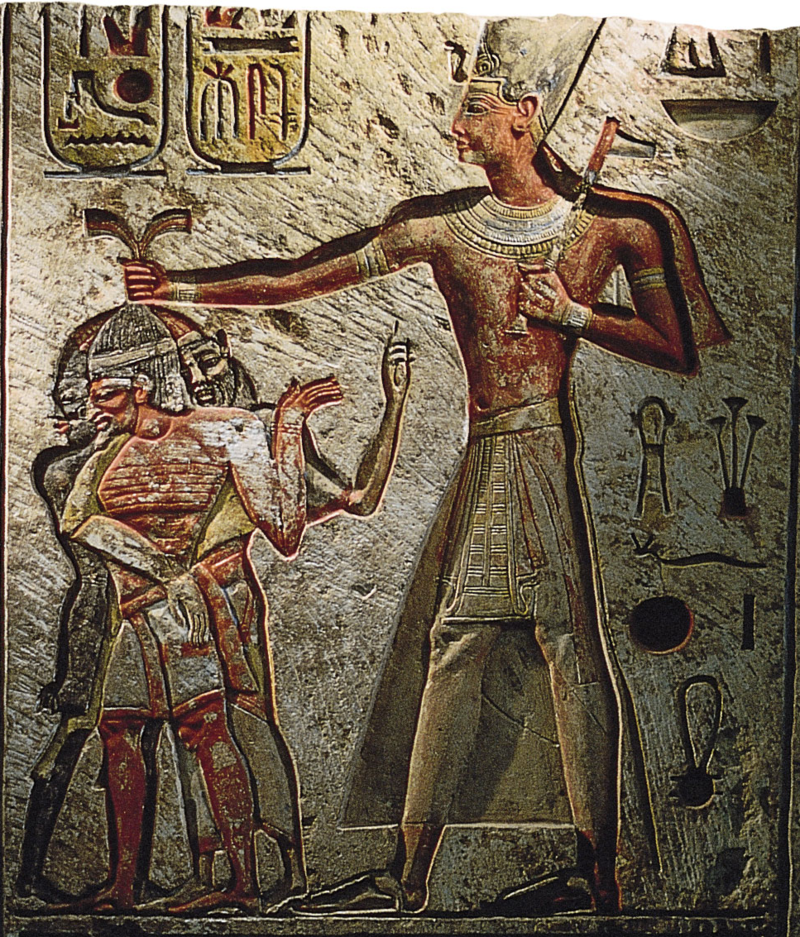
A relief of Ramesses II from Memphis showing him capturing enemies: a Nubian, a Libyan and a Syrian, c. 1250 BC
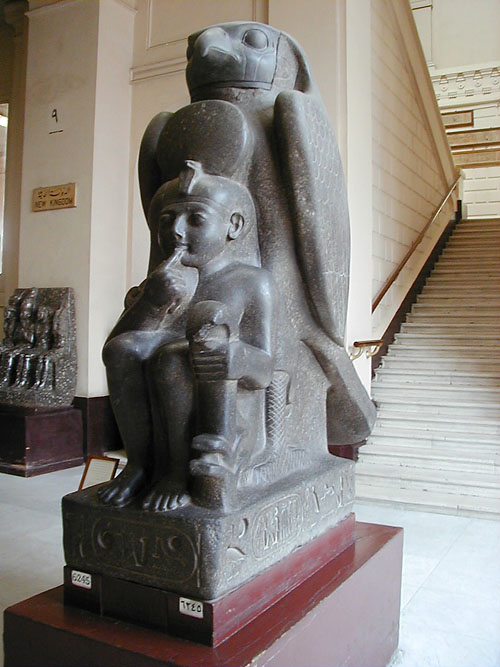
Ramesses II as a child embraced by Hauron (Egyptian Museum, Cairo)
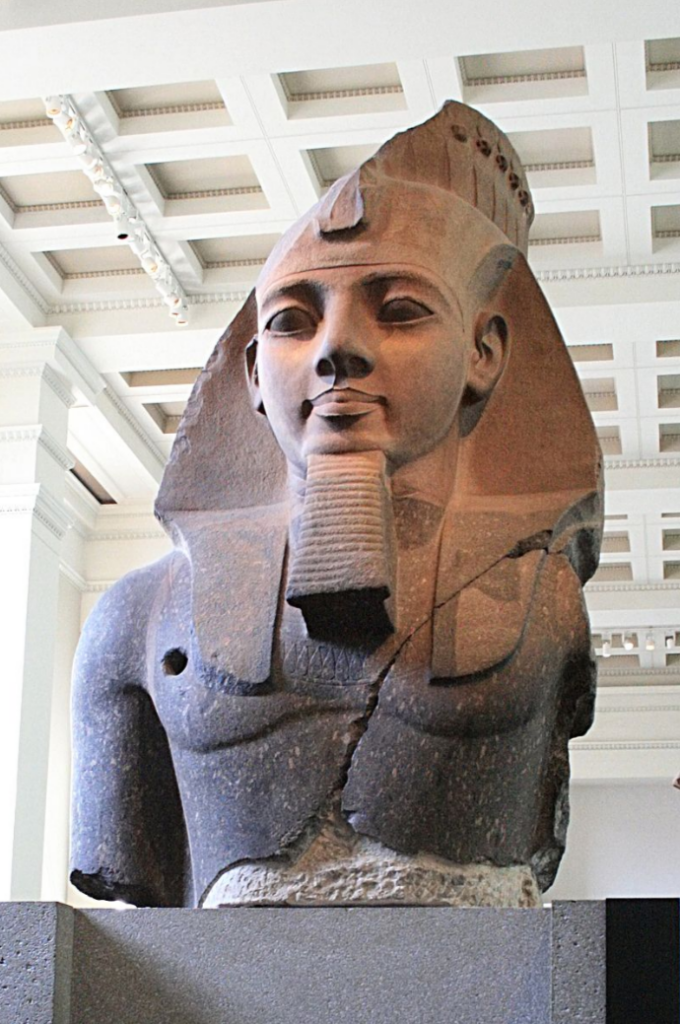
The Younger Memnon (c. 1250 BC), a statue depicting Ramesses II, from the Ramesseum in Thebes. Currently on display at the British Museum in London.
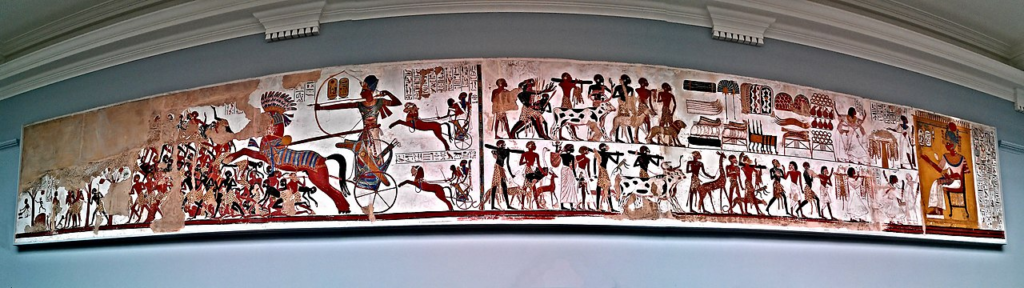
Wall Painting of the Temple of Beit El-Wali, which Ramesses II constructed in Nubia, that is currently held in the British Museum.
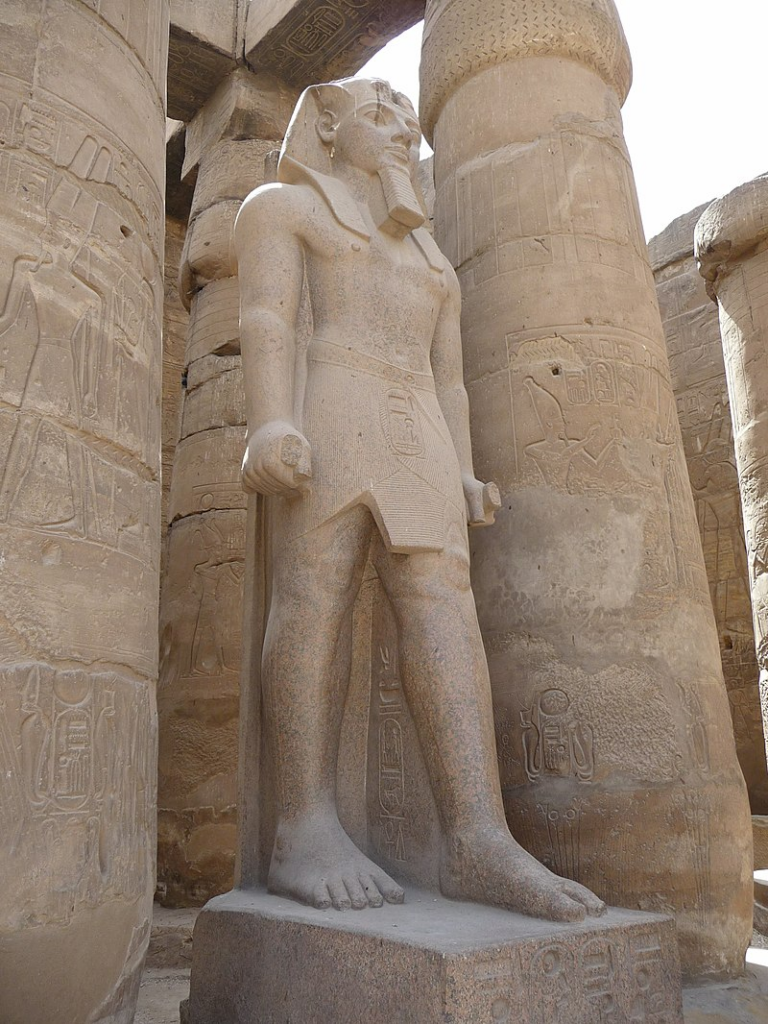
Colossal Statue of Ramesses II in the first peristyle court at Luxor
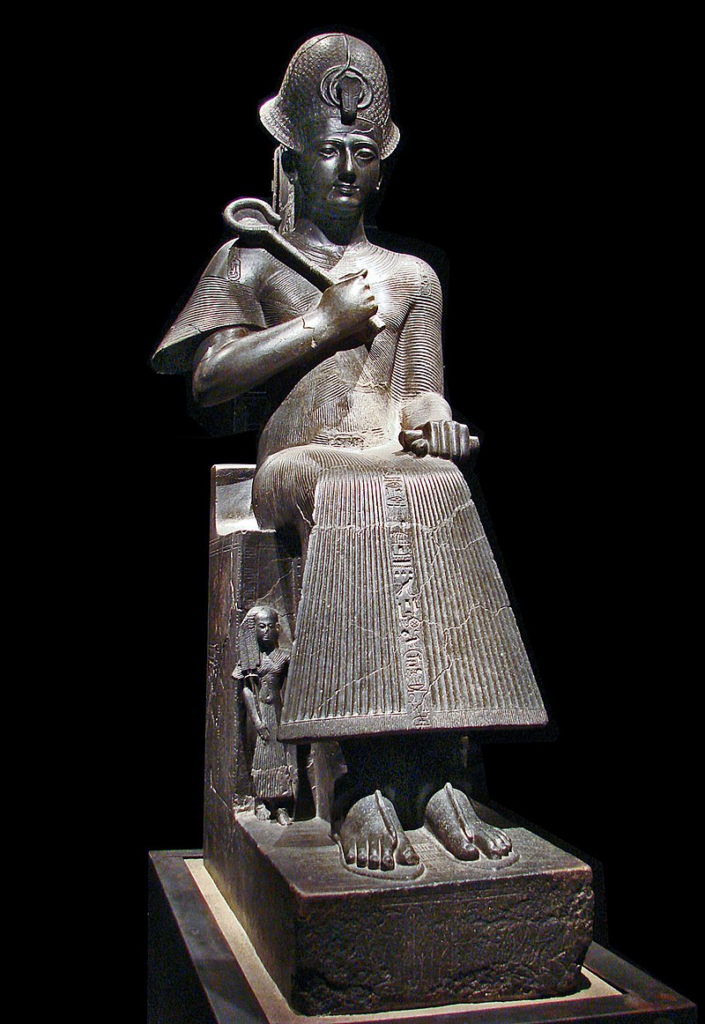
Granite statue of Ramesses II from Thebes. Currently on display at the Museo Egizio in Turin.
Therefore, Ramesses II cannot be the Fir’awn mentioned in the Qurʾān, because his works and the works of his people still exist, while the Qurʾān says that the works of Fir’awn and his people were destroyed. And this is presuming that all these artifacts are real thus Ramesses II existed, but if none of them are real and Ramesses II was just made-up by European colonialists, then the people who claim Ramesses II was Fir’awn have nothing to stand on if Ramesses II didn’t even exist at all but is just a fictional character made-up for old men to be entertained by, adult fairytales basically.
One could argue that the Fir’awn in the Qurʾān was not Ramesses II and was wiped out from history entirely and not mentioned in Egyptian history too, but then they would have to prove there is a void in the history of Egypt that was caused by Allah with the destruction of this Fir’awn, which is impossible to prove, and would be diving deep into the dark pit of poeticist reinterpretation. There are also no gaps in the history of Egypt, at least not major gaps, majority of the history has been recorded from the first Scorpion King up until the last Ptolemaic ruler whose own origin can be traced back Phoenicians through her ancestor Ptolemy, literally no major gaps in the history of Egypt, although, as a whole and entirety, the entirety of ancient Egyptian history can be put to question, especially since many temples were “reconstruction” and moved around by the British colonials and their excavation and construction workers, so even trying to fit Fir’awn and Mūsā into a history that is potentially fabricated is clearly not good.
https://en.m.wikipedia.org/wiki/Isetnofret
Isetnofret (or Isis-nofret or Isitnofret) (Ancient Egyptian: “the beautiful Isis”) was one of the Great Royal Wives of Pharaoh Ramesses II and was the mother of his successor, Merneptah. She was one of the most prominent of the royal wives, along with Nefertari, and was the chief queen after Nefertari’s death (around the 24th year of the pharaoh’s reign).
Sahih al-Bukhari 3769
Narrated Abu Musa Al-Ashʿari:
Allah’s Messenger (ﷺ) said, “Many amongst men attained perfection but amongst women none attained the perfection except Mary, the daughter of ʿImrān and Asiya, the wife of Pharaoh. And the superiority of ʿAʾisha to other women is like the superiority of Tharid (i.e. an Arabic dish) to other meals.”حَدَّثَنَا آدَمُ، حَدَّثَنَا شُعْبَةُ، قَالَ وَحَدَّثَنَا عَمْرٌو، أَخْبَرَنَا شُعْبَةُ، عَنْ عَمْرِو بْنِ مُرَّةَ، عَنْ مُرَّةَ، عَنْ أَبِي مُوسَى الأَشْعَرِيِّ ـ رضى الله عنه ـ قَالَ قَالَ رَسُولُ اللَّهِ صلى الله عليه وسلم “ كَمَلَ مِنَ الرِّجَالِ كَثِيرٌ، وَلَمْ يَكْمُلْ مِنَ النِّسَاءِ إِلاَّ مَرْيَمُ بِنْتُ عِمْرَانَ، وَآسِيَةُ امْرَأَةُ فِرْعَوْنَ، وَفَضْلُ عَائِشَةَ على النِّسَاءِ كَفَضْلِ الثَّرِيدِ عَلَى سَائِرِ الطَّعَامِ ”.
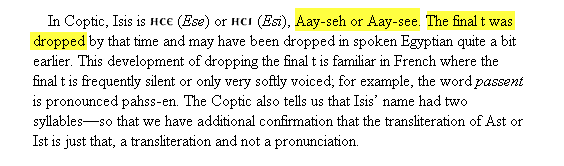
This ḥadīth still doesn’t prove that Fir’awn was an Egyptian, and that Ramesses II was Fir’awn. In fact, there is counter evidence to the claim that Ramesses II, and also the name of his wife Isetnofret wasn’t distorted into Aysa until after the establishment of Coptic language.
So anyone can try to prove that Ramesses II was Fir’awn on the basis of the linguistic gymnastics that the name of his wife was Isetnofret which became Aysa in Coptic which got Arabized into Asiya (only a theory, no epigraph evidence over the generations for the transition), but the discrepancies between Fir’awn from the Qurʾān and Ramesses II still exist on the basis of the Qurʾān, since the Qurʾān says that the works of Fir’awn and his people were destroyed (entirely), many works of Ramesses II and his people still exist and he still exists in history, specifically ancient Egyptian history which might all or mostly be a fabrication by Colonialists.
To explain in short, many people today argue:
“the Bible is inaccurate because it calls the King of Joseph’s era a Pharaoh and that Pharaoh was used as a title for Kings of Egypt much later, just before the birth of Moshe, and that it was already in use as title by the time Moshe was born, therefore the Koran gets it right by calling the King of Joseph’s era a Malik and the King of Moshe’s era a Fir’awn…” (which they believe is arabization of the coptic title Pharaoh and hence has the same meaning, a false belief). (Not a direct quote)
However, as stated and explained earlier on, this is a non-argument. Rather, it may be the same King in their stories in the Bible, because in the Qurʾān it factually is actually the same King, there’s evidence in the Qurʾān that Al-Malik in the story of Yūsuf is actually Fir’awn, contextual evidence based on Tasreef analysis, and the fact that the believer from the family of Fir’awn himself testifies to Fir’awn as per verses 40:28-34 that Yūsuf came to him and his people before with ʾĀyāt and that they rejected them, so the premise in their argument against the Bible that Yūsuf and Mūsā lived generations apart and that Al-Malik and Fir’awn are two different people who lived generations apart is false premise, since these verses implies otherwise.
Another quick short list analysis of events from the Yūsuf and Mūsā story.
12:30 – Al-Madīnah is used
12:55-56 – Yūsuf is appointed over the storehouses of the land and settles in the land wherever
12:78 – Yūsuf is a Governor (Al-ʿAzīz)
12:82 – Al-Qaryah is used
12:99-101 – Yūsuf told his parents to enter Miṣr and sat them upon the Throne
28:15 – Al-Madīnah is used
7:123 – Al-Madīnah is used
2:58 – Al-Qaryah is used
2:61 – Miṣr
7:161 – Al-Qaryah is used
10:87 – Miṣr, read following verses for context, they settled in Miṣr after leaving and being chased
40:28-34: A believer who concealed his faith from Amongst ʾĀlu Fir’awn telling Fir’awn that Yūsuf already came to him with the Āyāt of Allah
43:51 – Miṣr, Fir’awn unknowingly implying he doesn’t actually own it but rather claims a monopoly over it.
Many believe that Nabī Yūsuf lived centuries before Mūsā and Fir’awn, but according to the following verses, he didn’t, he was contemporaneous to Fir’awn and had interacted with him, which also proves that Al Malik (The King) is Fir’awn, since Al Malik is shown crucifying people in Surah Yūsuf, and Fir’awn too in other verses is shown crucifying people, since it’s clearly the same person.
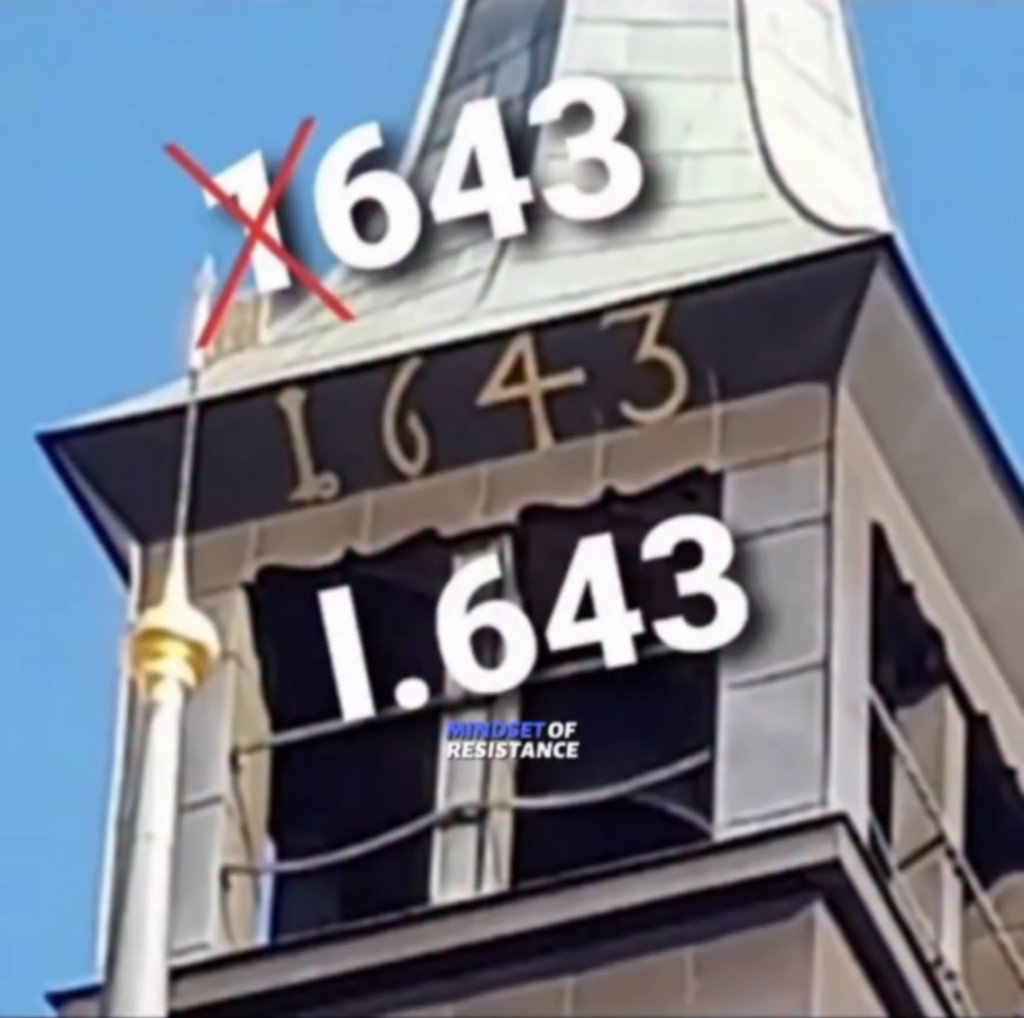
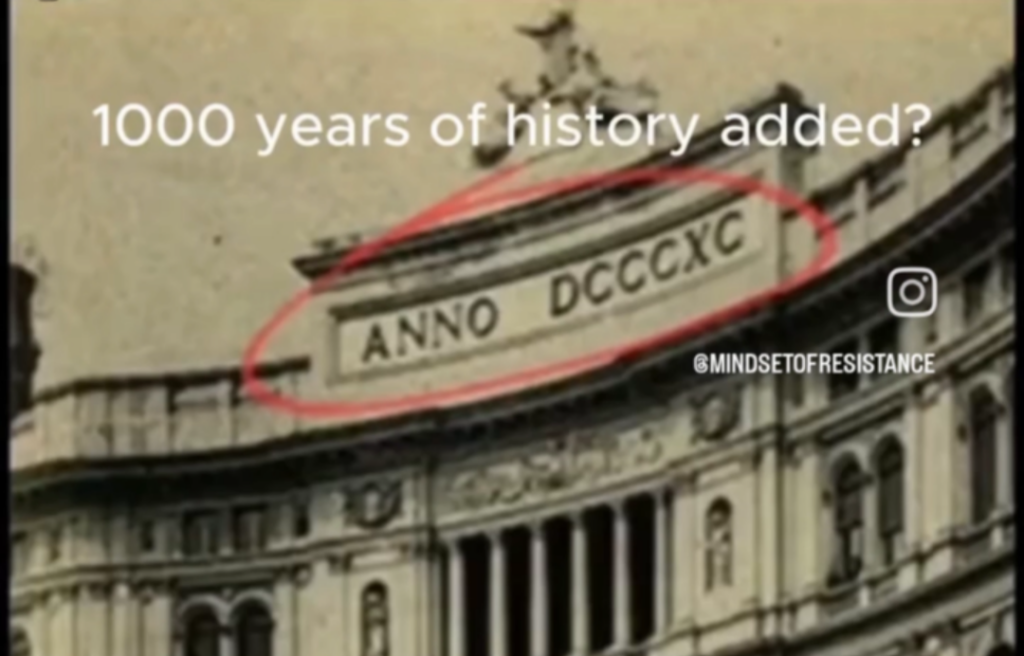
(There are Christians who do challenge their own history and say that Jesus lived 1000 years ago not 2000 years ago because some dates on European monuments are misread e.g. J100 misread as 1100 and that the monument was built 100 years after Jesus ascension and not 1100 years, though I don’t know how many of these revisionists acknowledge that Musa was the next generation after Yūsuf and not centuries apart. As shown in the following images.)

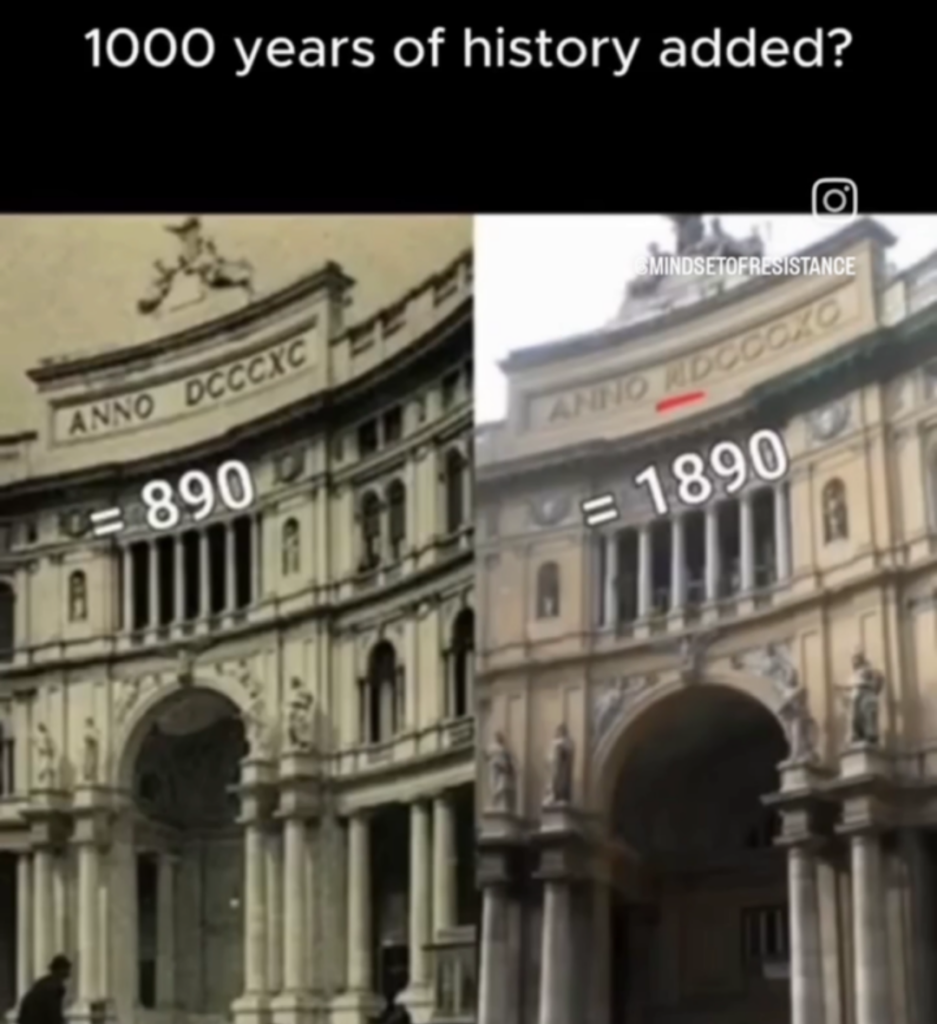
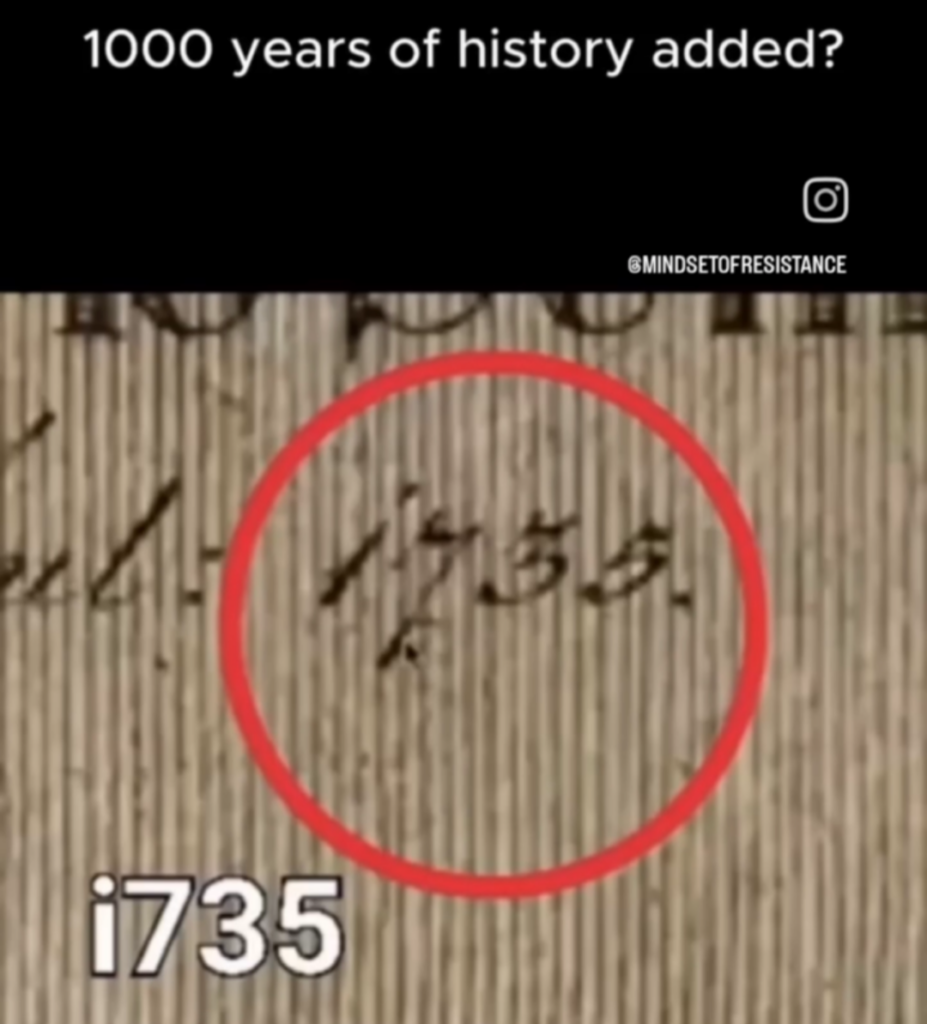
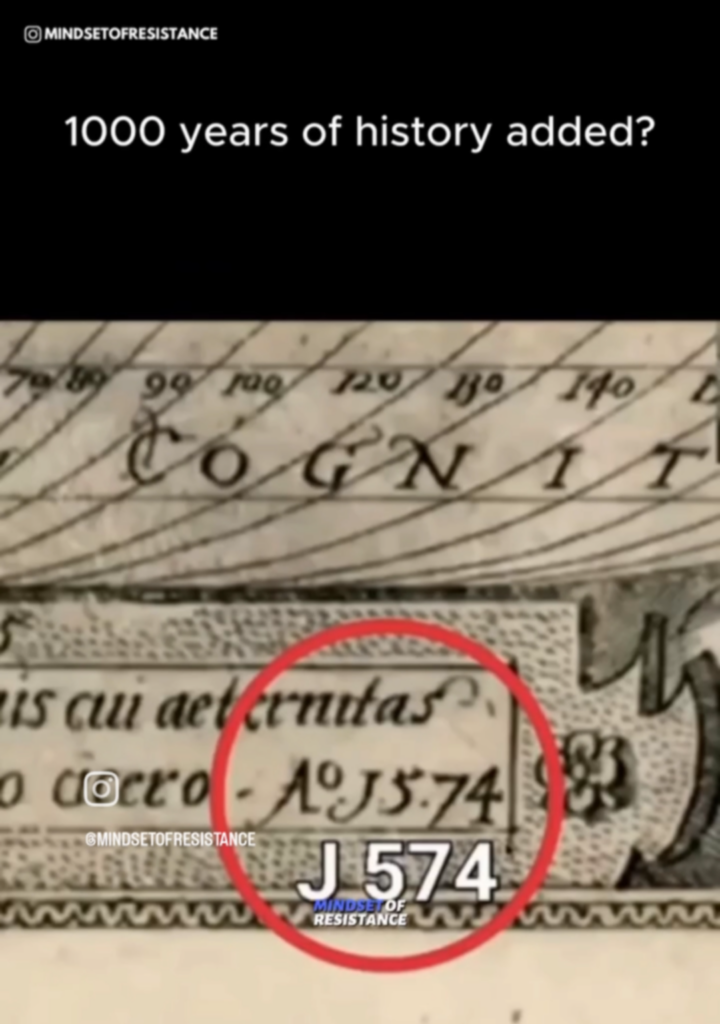
The verses are as follows:
وَقَالَ رَجُلٌ مُّؤْمِنٌ مِّنْ ءَالِ فِرْعَوْنَ يَكْتُمُ إِيمَـٰنَهُۥٓ أَتَقْتُلُونَ رَجُلًا أَن يَقُولَ رَبِّىَ ٱللَّـهُ وَقَدْ جَآءَكُم بِٱلْبَيِّنَـٰتِ مِن رَّبِّكُمْ وَإِن يَكُ كَـٰذِبًا فَعَلَيْهِ كَذِبُهُۥ وَإِن يَكُ صَادِقًا يُصِبْكُم بَعْضُ ٱلَّذِى يَعِدُكُمْ إِنَّ ٱللَّـهَ لَا يَهْدِى مَنْ هُوَ مُسْرِفٌ كَذَّابٌ يَـٰقَوْمِ لَكُمُ ٱلْمُلْكُ ٱلْيَوْمَ ظَـٰهِرِينَ فِى ٱلْأَرْضِ فَمَن يَنصُرُنَا مِنۢ بَأْسِ ٱللَّـهِ إِن جَآءَنَا قَالَ فِرْعَوْنُ مَآ أُرِيكُمْ إِلَّا مَآ أَرَىٰ وَمَآ أَهْدِيكُمْ إِلَّا سَبِيلَ ٱلرَّشَادِ وَقَالَ ٱلَّذِىٓ ءَامَنَ يَـٰقَوْمِ إِنِّىٓ أَخَافُ عَلَيْكُم مِّثْلَ يَوْمِ ٱلْأَحْزَابِ مِثْلَ دَأْبِ قَوْمِ نُوحٍ وَعَادٍ وَثَمُودَ وَٱلَّذِينَ مِنۢ بَعْدِهِمْ وَمَا ٱللَّـهُ يُرِيدُ ظُلْمًا لِّلْعِبَادِ وَيَـٰقَوْمِ إِنِّىٓ أَخَافُ عَلَيْكُمْ يَوْمَ ٱلتَّنَادِ يَوْمَ تُوَلُّونَ مُدْبِرِينَ مَا لَكُم مِّنَ ٱللَّـهِ مِنْ عَاصِمٍ وَمَن يُضْلِلِ ٱللَّـهُ فَمَا لَهُۥ مِنْ هَادٍ وَلَقَدْ جَآءَكُمْ يُوسُفُ مِن قَبْلُ بِٱلْبَيِّنَـٰتِ فَمَا زِلْتُمْ فِى شَكٍّۢ مِّمَّا جَآءَكُم بِهِۦ حَتَّىٰٓ إِذَا هَلَكَ قُلْتُمْ لَن يَبْعَثَ ٱللَّـهُ مِنۢ بَعْدِهِۦ رَسُولًا كَذَٰلِكَ يُضِلُّ ٱللَّـهُ مَنْ هُوَ مُسْرِفٌ مُّرْتَابٌ
And a believing man from the family of Fir’awn who concealed his faith said, “Do you kill a man [merely] because he says, ‘My Lord is Allah’ while he has brought you clear proofs from your Lord? And if he should be lying, then upon him is [the consequence of] his lie; but if he should be truthful, there will strike you some of what he promises you. Indeed, Allah does not guide one who is a transgressor and a liar. O my people, sovereignty is yours today, [your being] dominant in the land. But who would protect us from the punishment of Allah if it came to us?” Fir’awn said, “I do not show you except what I see, and I do not guide you except to the way of right conduct.” And he who believed said, “O my people, indeed I fear for you [a fate] like the day of the companies – Like the custom of the people of Nūḥ and of ʿĀd and Thāmūd and those after them. And Allah wants no injustice for [His] servants. And O my people, indeed I fear for you the Day of Calling – The Day you will turn your backs fleeing; there is not for you from Allah any protector. And whoever Allah leaves astray – there is not for him any guide. And Yūsuf had already come to you before with clear proofs, but you remained in doubt of that which he brought to you, until when he left, you said, ‘Never will Allah send a messenger after him.’ Thus does Allah leave astray he who is a transgressor and baseless skeptic.”
Al Ghāfir (40), ʾĀyāt 28-34
Since this clears the false assumption that “If Al Malik is Fir’awn, and Yūsuf met Fir’awn, then why didn’t Yūsuf say anything to him?”, according to the confession of this believer from Fir’awn’s family, Yūsuf already did, but Fir’awn rejected him.
Also these verses in Chapter 40 affirm more that Al-Khidhr (ḥadīth-based name) in Surah Al Kaḥf on the ship with Mūsā is none other than Yūsuf himself.
The usual objection to this theory is that Yūsuf and Mūsā lived centuries apart, however, since the 40:28-34 puts Yūsuf in the same timeline as Fir’awn and thus Mūsā, it’s basically a different chronology, so this objection is ruled out because a different chronology is given in the Qurʾān.
Most people read 40:34 on its own after 40:33, without considering the continuity of the context. To gain the understanding that Yūsuf lived in the same era as Fir’awn and had interacted with him and his people, they must read 40:34 together with the previous verses, primarily starting from 40:28.
The “city” in 36:13-15 is Al-Qaryah, whilst the “city” of Fir’awn is Al Madinah. The Al-Qaryah is Al-Qaryah of Miṣr. What this means is that Fir’awn didn’t actually rule over Miṣr and Al Qaryah of Miṣr, especially during the time of Mūsā. It was Yūsuf who ruled over it. As shown in the short list sent earlier, they’re separate lands and cities, and they can’t be “Egypt”.
The following are Theodore Noldeke’s exact words from his book History of the Koran: “….The problem with this passage is that the Egyptian civilization has never depended on rain for the success of its crops. Egyptian agriculture has always depended on the flooding of the Nile for water. Clearly, Muhammad was ignorant of Egypt’s geography and climatology and he demonstrates this by associating good harvests with rainfall.”
However, the problem with this argument is that it says Egypt, but the Qurʾān doesn’t say Egypt, it says Miṣr, in fact, from this simple geological difference, we know that Miṣr isn’t Egypt and the city of Al Malik (Fir’awn) isn’t Egypt either, as Egypt relies on the flooding of the Nile, while Miṣr and the city of Fir’awn relies on rainfall, according to the following verses:
وَهُوَ ٱلَّذِى يُنَزِّلُ ٱلْغَيْثَ مِنۢ بَعْدِ مَا قَنَطُوا۟ وَيَنشُرُ رَحْمَتَهُۥ وَهُوَ ٱلْوَلِىُّ ٱلْحَمِيدُ
And it is He who sends down the rain after they had despaired and spreads His mercy. And He is the Protector, the Praiseworthy.
Ash-Shūrā (42), ʾĀyah 28
قَالَ تَزْرَعُونَ سَبْعَ سِنِينَ دَأَبًا فَمَا حَصَدتُّمْ فَذَرُوهُ فِى سُنۢبُلِهِۦٓ إِلَّا قَلِيلًا مِّمَّا تَأْكُلُونَ ثُمَّ يَأْتِى مِنۢ بَعْدِ ذَٰلِكَ سَبْعٌ شِدَادٌ يَأْكُلْنَ مَا قَدَّمْتُمْ لَهُنَّ إِلَّا قَلِيلًا مِّمَّا تُحْصِنُونَ ثُمَّ يَأْتِى مِنۢ بَعْدِ ذَٰلِكَ عَامٌ فِيهِ يُغَاثُ ٱلنَّاسُ وَفِيهِ يَعْصِرُونَ
He said, “You will plant for seven years consecutively; and what you harvest leave in its spikes, except a little from which you will eat. Then will come after that seven difficult [years] which will consume what you saved for them, except a little from which you will store. Then will come after that a year in which the people will be given rain and in which they will press [olives and grapes].”
Yūsuf (12), ʾĀyāt 47-49
قَالَ فَمَن رَّبُّكُمَا يَـٰمُوسَىٰ قَالَ رَبُّنَا ٱلَّذِىٓ أَعْطَىٰ كُلَّ شَىْءٍ خَلْقَهُۥ ثُمَّ هَدَىٰ قَالَ فَمَا بَالُ ٱلْقُرُونِ ٱلْأُولَىٰ قَالَ عِلْمُهَا عِندَ رَبِّى فِى كِتَـٰبٍ لَّا يَضِلُّ رَبِّى وَلَا يَنسَى ٱلَّذِى جَعَلَ لَكُمُ ٱلْأَرْضَ مَهْدًا وَسَلَكَ لَكُمْ فِيهَا سُبُلًا وَأَنزَلَ مِنَ ٱلسَّمَآءِ مَآءً فَأَخْرَجْنَا بِهِۦٓ أَزْوَٰجًا مِّن نَّبَاتٍ شَتَّىٰ كُلُوا۟ وَٱرْعَوْا۟ أَنْعَـٰمَكُمْ إِنَّ فِى ذَٰلِكَ لَـَٔايَـٰتٍ لِّأُو۟لِى ٱلنُّهَىٰ مِنْهَا خَلَقْنَـٰكُمْ وَفِيهَا نُعِيدُكُمْ وَمِنْهَا نُخْرِجُكُمْ تَارَةً أُخْرَىٰ
[Fir’awn] said, “So who is the Lord of you two, O Mūsā?” He said, “Our Lord is He who gave each thing its form and then guided [it].” [Fir’awn] said, “Then what is the case of the former generations?” [Mūsā] said, “The knowledge thereof is with my Lord in a record. My Lord neither errs nor forgets.” [It is He] who has made for you the earth as a bed [spread out] and inserted therein for you roadways and sent down from the sky, rain and produced thereby categories of various plants. Eat [therefrom] and pasture your livestock. Indeed, in that are signs for those of intelligence. From the earth we created you, and into it we will return you, and from it we will extract you another time.
Ṭā Hā (20), ʾĀyāt 49-55
To further add that another reason why Al Malik in Yūsuf’s story is Fir’awn is due to the following correlation between these two segments of verses besides the one where Yūsuf had already brought ʾĀyāt to Fir’awn and his people which is 40:28-34:
قَالَ فِرْعَوْنُ ءَامَنتُم بِهِۦ قَبْلَ أَنْ ءَاذَنَ لَكُمْ إِنَّ هَـٰذَا لَمَكْرٌ مَّكَرْتُمُوهُ فِى ٱلْمَدِينَةِ لِتُخْرِجُوا۟ مِنْهَآ أَهْلَهَا فَسَوْفَ تَعْلَمُونَ لَأُقَطِّعَنَّ أَيْدِيَكُمْ وَأَرْجُلَكُم مِّنْ خِلَـٰفٍ ثُمَّ لَأُصَلِّبَنَّكُمْ أَجْمَعِينَ
Said Fir’awn, “You believed in him before I gave you permission. Indeed, this is a conspiracy which you conspired in the city to expel therefrom its people. But you are going to know. I will surely cut off your Ayd and your Arjul on opposite sides; then I will surely crucify you all.”
Al Aʿrāf (7), ʾĀyāt 123-124
يَـٰصَـٰحِبَىِ ٱلسِّجْنِ أَمَّآ أَحَدُكُمَا فَيَسْقِى رَبَّهُۥ خَمْرًا وَأَمَّا ٱلْـَٔاخَرُ فَيُصْلَبُ فَتَأْكُلُ ٱلطَّيْرُ مِن رَّأْسِهِۦ قُضِىَ ٱلْأَمْرُ ٱلَّذِى فِيهِ تَسْتَفْتِيَانِ
O two companions of prison, as for one of you, he will give drink to his master of wine; but as for the other, he will be crucified, and the birds will eat from his head. The matter has been decreed about which you both inquire.”
Yūsuf (12), ʾĀyah 41
The correlation here is the words used for crucify/crucified, they share the same root consonantal pattern and thus the same semantic field which is obvious from the context and all the dictionaries that describe crucifixion/impalement.