القرءان سورة طه 22
وَٱضْمُمْ يَدَكَ إِلَىٰ جَنَاحِكَ تَخْرُجْ بَيْضَآءَ مِنْ غَيْرِ سُوٓءٍ ءَايَةً أُخْرَىٰ
And draw your hand towards your wing (janāḥika); it will come out white without disease – another sign, (Qur’an 20:22)
The word used in this verse for wing is جَنَاح (janāḥ), janāḥ is usually translated as “arm-pit” or “bosom” in this verse, however, in other verses, this word in plural is translated as wings, for example:
القرءان سورة الأنعام 38
وَمَا مِن دَآبَّةٍ فِى ٱلْأَرْضِ وَلَا طَـٰٓئِرٍ يَطِيرُ بِجَنَاحَيْهِ إِلَّآ أُمَمٌ أَمْثَالُكُم مَّا فَرَّطْنَا فِى ٱلْكِتَـٰبِ مِن شَىْءٍ ثُمَّ إِلَىٰ رَبِّهِمْ يُحْشَرُونَ
And there is no creature on [or within] the earth or bird that flies with its wings (janāḥayhi) except [that they are] communities like you. We have not neglected in the Register a thing. Then unto their Lord they will be gathered. (Qur’an 6:38)
The word دَآبَّةٍ (daabatin) simply means an earthly creature living in the earth which includes mammals, the reason why janāḥayhi can’t mean “arms” here is because the verse mentions طَـٰٓئِرٍ (taa’ir) for bird, birds don’t have arms, they have wings, so it must be incumbent that the daabatin also has wings.
Thus the word must mean wing throughout the Qur’an.
القرءان سورة القصص 32-31
وَأَنْ أَلْقِ عَصَاكَ فَلَمَّا رَءَاهَا تَهْتَزُّ كَأَنَّهَا جَآنٌّ وَلَّىٰ مُدْبِرًا وَلَمْ يُعَقِّبْ يَـٰمُوسَىٰٓ أَقْبِلْ وَلَا تَخَفْ إِنَّكَ مِنَ ٱلْـَٔامِنِينَ ٱسْلُكْ يَدَكَ فِى جَيْبِكَ تَخْرُجْ بَيْضَآءَ مِنْ غَيْرِ سُوٓءٍ وَٱضْمُمْ إِلَيْكَ جَنَاحَكَ مِنَ ٱلرَّهْبِ فَذَٰنِكَ بُرْهَـٰنَانِ مِن رَّبِّكَ إِلَىٰ فِرْعَوْنَ وَمَلَإِي۟هِۦٓ إِنَّهُمْ كَانُوا۟ قَوْمًا فَـٰسِقِينَ
“And throw down your staff.” But when he saw it writhing as if it was a snake/dragon (Jānn), he turned in flight and did not return. [Allah said], “O Musa, approach and fear not. Indeed, you are of the secure. Insert your hand into your pocket (jayb); it will come out white, without disease. And draw in your wing (janāḥika) close to you against fear, for those are two proofs from your Lord to Pharaoh and his establishment. Indeed, they have been a people defiantly disobedient.” (Qur’an 28:31-32)
These verses states that Musa is told down his staff and saw it moving like other snakes, and that he has a wing. Usually this verse, the word janāḥika is translated as arm, however, the word means wing, as per other verses where the word is translated aswing/wings this would mean that Musa had wings.
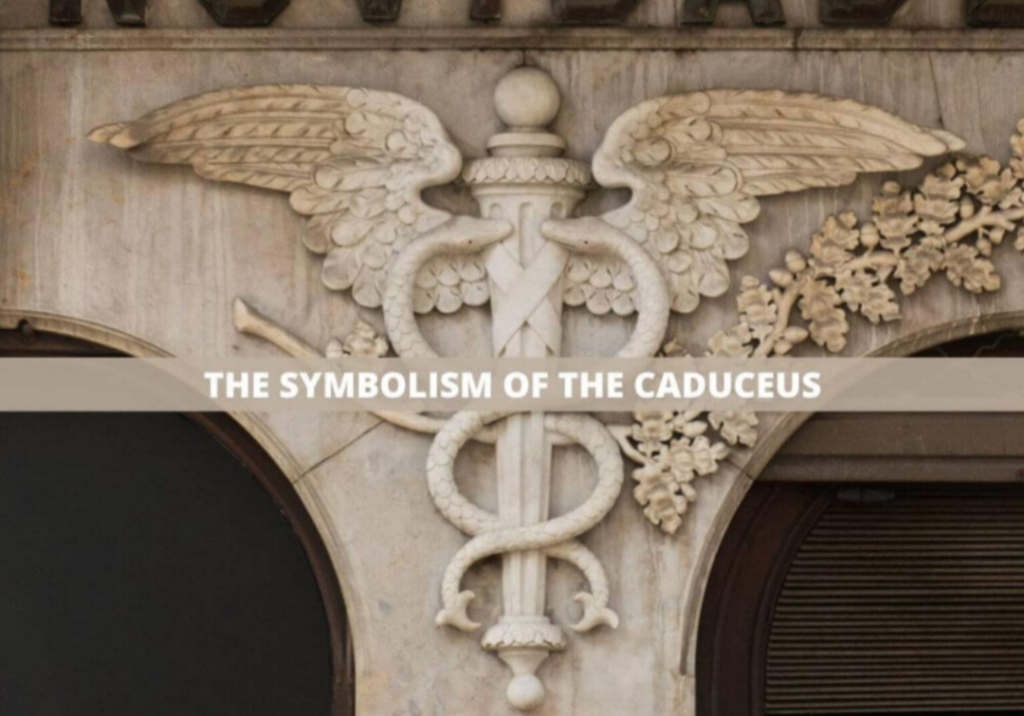
The description of these two verses sounds similar to the Caduceus symbol, which is a staff, with snakes and wings.
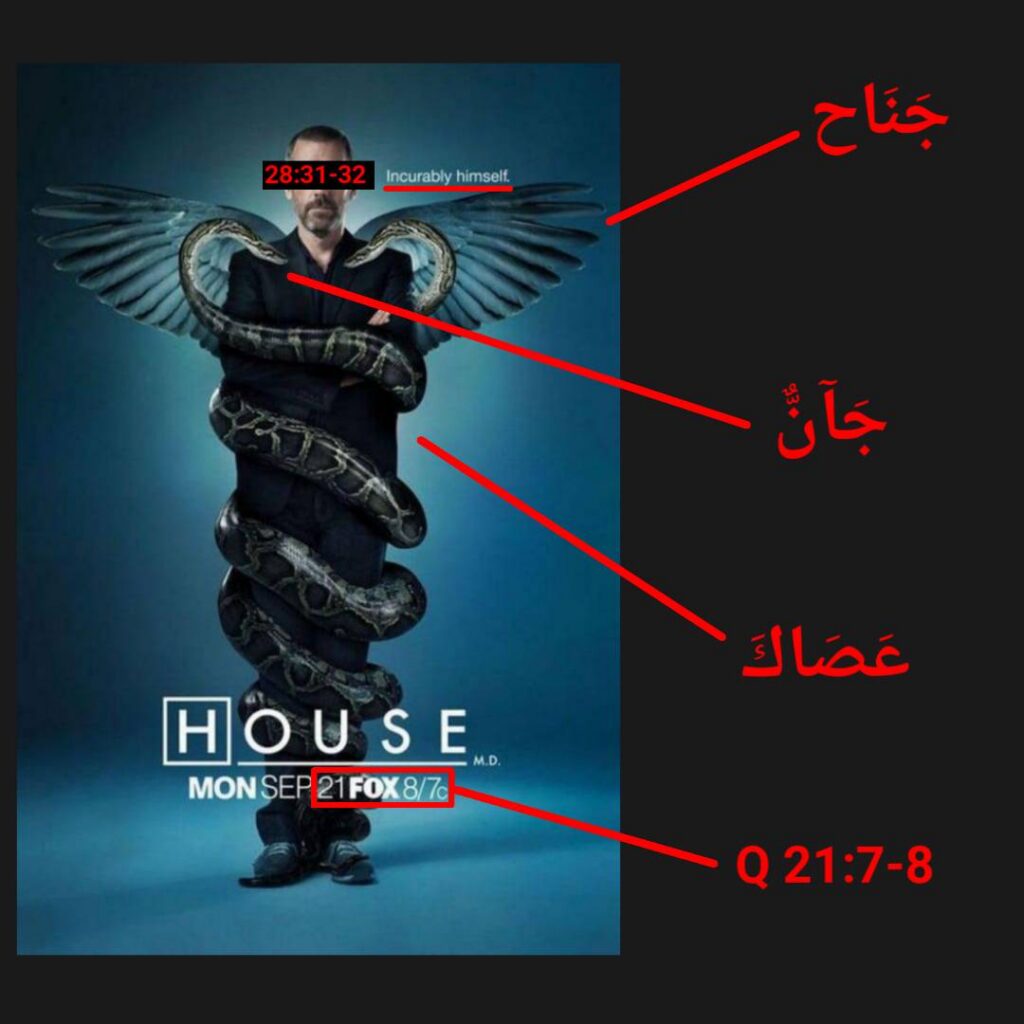
Poster of famous medical show House MD

House is portrayed as a human caduceus, 21 8/7 could be a reference to verses 21:7-8. Both these are about mortality which is incurable, “incurably himself”.
القرءان سورة الأنبياء 8-7
وَمَآ أَرْسَلْنَا قَبْلَكَ إِلَّا رِجَالًا نُّوحِىٓ إِلَيْهِمْ فَسْـَٔلُوٓا۟ أَهْلَ ٱلذِّكْرِ إِن كُنتُمْ لَا تَعْلَمُونَ وَمَا جَعَلْنَـٰهُمْ جَسَدًا لَّا يَأْكُلُونَ ٱلطَّعَامَ وَمَا كَانُوا۟ خَـٰلِدِينَ وَمَا جَعَلْنَـٰهُمْ جَسَدًا لَّا يَأْكُلُونَ ٱلطَّعَامَ وَمَا كَانُوا۟ خَـٰلِدِينَ
And we sent not before you, except men to whom We revealed, so ask the people of the message if you do not know. And We did not make them bodies not eating food, nor were they immortal. (Qur’an 21:7-8)