The Core
Transcription
The name of the Qur’an we read today is called Ḥafṣ ‘an ‘Āsim (حَفْص عَن عَاصِم), the word Ḥafṣ (حَفْص) is a consonantal anagram of the Arabic word for pages which is Ṣuḥuf (صُحُف). The transcription of the Qur’an that we read, the Malā’ikah were the ones who wrote down the Qur’an on pages according to the following verses.
القرءان سورة عبس 16-11
كَلَّآ إِنَّهَا تَذْكِرَةٌ فَمَن شَآءَ ذَكَرَهُۥ فِى صُحُفٍ مُّكَرَّمَةٍ مَّرْفُوعَةٍ مُّطَهَّرَةٍۭ بِأَيْدِى سَفَرَةٍ كِرَامٍۭ بَرَرَةٍ
No indeed; it is a Reminder, and whoso wills, shall remember it, upon pages high-honoured, uplifted, purified, by the hands of scribes, noble, pious. (Qur’an 80:11-16)
According to these verses, the Malā’ikah wrote the Qur’an, based on the kiraam (كِرَامٍۭ) used in these verses meaning noble, and used in other verses, such as the following verses, referring to the Malā’ikah.
القرءان سورة الإنفطار 14-10
وَإِنَّ عَلَيْكُمْ لَحَـٰفِظِينَ كِرَامًا كَـٰتِبِينَ يَعْلَمُونَ مَا تَفْعَلُونَ إِنَّ ٱلْأَبْرَارَ لَفِى نَعِيمٍ وَإِنَّ ٱلْفُجَّارَ لَفِى جَحِيمٍ
And indeed, [appointed] over you are keepers, Noble and recording; They know whatever you do. Indeed, the righteous will be in pleasure, And indeed, the wicked will be in Hellfire. (Qur’an 82:10-14)
In these verses, the word Kiraam (كِرَامًا) is used, a plural word, as the same in verse 80:11-16, and by context we know that these scribes described as Kiraam (كِرَامٍۭ) in 80:11-16 are Malā’ikah that by context the Ḥāfizīn in these verses are actually the Malā’ikah, presiding over humans and knowing what they do. So how does one really prove that that Malā’ikah did really write the Qur’an? This is done via context and that would be a matter of faith and a separate study.
Compilation
The following verse negates the belief that there is something compiled similar to the Qur’an in Islam, any claimant of the Qur’an who insists otherwise is going against the Qur’an, regardless of whether it’s a Sunni, Shia, Farahi, Qadiani, etc.
القرءان سورة الإسراء 88
قُل لَّئِنِ ٱجْتَمَعَتِ ٱلْإِنسُ وَٱلْجِنُّ عَلَىٰٓ أَن يَأْتُوا۟ بِمِثْلِ هَـٰذَا ٱلْقُرْءَانِ لَا يَأْتُونَ بِمِثْلِهِۦ وَلَوْ كَانَ بَعْضُهُمْ لِبَعْضٍ ظَهِيرًا
• Saheeh International
Say, “If mankind and the jinn gathered in order to produce the like of this Qur’an, they could not produce the like of it, even if they were to each other assistants.” (Qur’an 17:88)
Preservation
The name ‘Asim from the colloquial name Ḥafṣ ‘an ‘Asin for the Qur’an means Shield, the name ‘Asim is somewhat similar to the word Ḥāfiz meaning “preserver”, “The Shield” or ‘Asim are the Ḥāfizūn, whom are Allah and His Angels.
One argument against the promise of preservation is that the verse that talks about Allah’s promise of preservation is not explicitly talking about the Qur’an but rather the preservation of the Adh-Dhikr.
However, According to the following verses, The Remembrance (Adh-Dhikr) is the Qur’an:
القرءان سورة الأنبياء 10
لَقَدْ أَنزَلْنَآ إِلَيْكُمْ كِتَـٰبًا فِيهِ ذِكْرُكُمْ أفَلَا تَعْقِلُونَ
We have certainly sent down to you a Book in which is your remembrance. Then will you not reason? (Qur’an 21:10)
القرءان سورة ص 1
صٓ وَٱلْقُرْءَانِ ذِى ٱلذِّكْرِ
Ṣād, and the Qur’an that contains the remembrance. (Qur’an 38:1)
Therefore, for the Adh-Dhikr to be preserved, the written Qur’an must also be preserved.
القرءان سورة الحجر 9
إِنَّا نَحْنُ نَزَّلْنَا ٱلذِّكْرَ وَإِنَّا لَهُۥ لَحَـٰفِظونَ
We sent down the remembrance, and We are its custodians/preservers (Hāfizūn). (Qur’an 15:9)
Hāfizūn (preservers) in this verse is in plural, so the “We” can’t be a singular Royal-plural, so it can’t be Allah alone. The Ḥāfizūn includes Allah and his Malā’ikah.
Allah and his Malā’ikah control the access to Qur’an, hypothetically if the Qur’an became corrupted them then Allah would cause new copies into existence and command it’s distribution through the his Malā’ikah. The proof for the existence of Allah necessitates that the Qur’an must be preserved, otherwise we would only be able to know the existence of Allah through intuition but no divinely inspired nuances on His existence which results in debates on who Allah is, by trying to ascribe a description after becoming inclined to His existence, so this would necessity the Qur’an a book to refine and clear the confusion.
القرءان سورة الإنفطار 14-10
وَإِنَّ عَلَيْكُمْ لَحَـٰفِظِينَ كِرَامًا كَـٰتِبِينَ يَعْلَمُونَ مَا تَفْعَلُونَ إِنَّ ٱلْأَبْرَارَ لَفِى نَعِيمٍ وَإِنَّ ٱلْفُجَّارَ لَفِى جَحِيمٍ
And indeed, [appointed] over you are keepers, Noble and recording; They know whatever you do. Indeed, the righteous will be in pleasure, And indeed, the wicked will be in Hellfire. (Qur’an 82:10-14)
The term Ḥāfizūn in this verse is referring to the Malā’ikah who record everything as Kātibīn.
القرءان سورة الأنبياء 94
فَمَن یَعۡمَلۡ مِنَ ٱلصَّـٰلِحَـٰتِ وَهُوَ مُؤۡمِنࣱ فَلَا كُفۡرَانَ لِسَعۡیِهِۦ وَإِنَّا لَهُۥ كَـٰتِبُونَ
• Saheeh International
So whoever does righteous deeds while he is a believer – no denial will there be for his effort,[1] and indeed We [i.e., Our angels], of it, are recorders. (Qur’an 21:94)
The following is list of reasons why these Ḥāfizīn can’t be humans preserving the Qur’an.
Humans can’t be Ḥāfiẓīn. Humans have limited knowledge and intellectual deficit but ḥāfiẓīn “know what you do” according to the following verses, which required constant awareness beyond human capacity.
القرءان سورة الإنفطار 12-10
وَإِنَّ عَلَيْكُمْ لَحَـٰفِظِينَ كِرَامًا كَـٰتِبِينَ القرءان سورة طه يَعْلَمُونَ مَا تَفْعَلُونَ
• Saheeh International
And indeed, [appointed] over you are keepers, Noble and recording; They know whatever you do. (Qur’an 82:10-12)
Humans have physical limitations, so they can’t stay up every night 24/7, whereas the mu‘aqqibāt surround every human day and night which is impossible for any human Humans so they are unable to guard by “Allah’s command” (min amrillah) in the technical sense, according to the following verses.
القرءان سورة الرعد 11-10
سَوَآءٌ مِّنكُم مَّنْ أَسَرَّ ٱلْقَوْلَ وَمَن جَهَرَ بِهِۦ وَمَنْ هُوَ مُسْتَخْفٍۭ بِٱلَّيْلِ وَسَارِبٌۢ بِٱلنَّهَارِ لَهُۥ مُعَقِّبَـٰتٌ مِّنۢ بَيْنِ يَدَيْهِ وَمِنْ خَلْفِهِۦ يَحْفَظُونَهُۥ مِنْ أَمْرِ ٱللَّـهِ إِنَّ ٱللَّـهَ لَا يُغَيِّرُ مَا بِقَوْمٍ حَتَّىٰ يُغَيِّرُوا۟ مَا بِأَنفُسِهِمْ وَإِذَآ أَرَادَ ٱللَّـهُ بِقَوْمٍ سُوٓءًا فَلَا مَرَدَّ لَهُۥ وَمَا لَهُم مِّن دُونِهِۦ مِن وَالٍ
• Saheeh International
It is the same [to Him] concerning you whether one conceals [his] speech or one publicizes it and whether one is hidden by night or conspicuous [among others] by day. For each one are successive [angels] before and behind him who protect him by the decree of Allah. Indeed, Allah will not change the condition of a people until they change what is in themselves. And when Allah intends for a people ill, there is no repelling it. And there is not for them besides Him any patron. (Qur’an 13:10-11)
Humans are dependent and experience mortality but the Ḥāfiẓīn continue until death where they hand the soul to the messengers of death, according to the following verse.
القرءان سورة الأنعام 61
وَهُوَ ٱلْقَاهِرُ فَوْقَ عِبَادِهِۦ وَيُرْسِلُ عَلَيْكُمْ حَفَظَةً حَتَّىٰٓ إِذَا جَآءَ أَحَدَكُمُ ٱلْمَوْتُ تَوَفَّتْهُ رُسُلُنَا وَهُمْ لَا يُفَرِّطُونَ
• Saheeh International
And He is the subjugator over His servants, and He sends over you guardian-angels until, when death comes to one of you, Our messengers take him, and they do not fail [in their duties]. (Qur’an 6:61)
The Qur’an uses “amr” exclusively for angels carrying out divine decrees according to the following verses.
القرءان سورة النحل 50
يَخَافُونَ رَبَّهُم مِّن فَوْقِهِمْ وَيَفْعَلُونَ مَا يُؤْمَرُونَ
• Saheeh International
They fear their Lord above them, and they do what they are commanded. (Qur’an 16:50)
القرءان سورة القدر 4
تَنَزَّلُ ٱلْمَلَـٰٓئِكَةُ وَٱلرُّوحُ فِيهَا بِإِذْنِ رَبِّهِم مِّن كُلِّ أَمْرٍ
• Saheeh International
The angels and the Spirit descend therein by permission of their Lord for every matter. (Qur’an 97:4)
Ḥāfiẓīn/Kātibīn record “every utterance” however Humans lack the power to do that, according to the following verses.
القرءان سورة ق 20-16
وَلَقَدْ خَلَقْنَا ٱلْإِنسَـٰنَ وَنَعْلَمُ مَا تُوَسْوِسُ بِهِۦ نَفْسُهُۥ وَنَحْنُ أَقْرَبُ إِلَيْهِ مِنْ حَبْلِ ٱلْوَرِيدِ إِذْ يَتَلَقَّى ٱلْمُتَلَقِّيَانِ عَنِ ٱلْيَمِينِ وَعَنِ ٱلشِّمَالِ قَعِيدٌ مَّا يَلْفِظُ مِن قَوْلٍ إِلَّا لَدَيْهِ رَقِيبٌ عَتِيدٌ وَجَآءَتْ سَكْرَةُ ٱلْمَوْتِ بِٱلْحَقِّ ذَٰلِكَ مَا كُنتَ مِنْهُ تَحِيدُ وَنُفِخَ فِى ٱلصُّورِ ذَٰلِكَ يَوْمُ ٱلْوَعِيدِ
• Saheeh International
And We have already created man and know what his soul whispers to him, and We are closer to him than [his] jugular vein When the two receivers receive, seated on the right and on the left. Man does not utter any word except that with him is an observer prepared [to record]. And the intoxication of death will bring the truth; that is what you were trying to avoid. And the Horn will be blown. That is the Day of [carrying out] the threat. (Qur’an 50:16-20)
Sectarian scholars claim that the Tashkeel (including Harakat and Tanween) were added to the Qur’an later to make it easier for the non-arabs to pronounce because allegedly the Arab salaf already had memorized the vowel (harakat) and double-consonant (tanween) marks of the Qur’an and knew how to pronounce it from the Prophet, and that’s how they claim that there’s 7 modes of pronunciations because allegedly these Arab Salafs learnt these 7 modes from the Nabi himself, and therefore every Muslims must believe in the Oral traditions of the Salafs and the 7 modes of recitation otherwise one wouldn’t know which Qira’at to specifically recite and wouldn’t know how to pronounce the Quran and how to vowelise the words and verses and would struggle on understanding the historical stories in the Qur’an like chapter 30 Surah Ar-Rum, if it is Ghalabat or Ghulibat, or in Surah Al Fatihah if it is Ar-Raheem or Ar-Rajeem. That’s the idea, but it’s merely lies and deceptions, even the Arabs need the the vowelisation marks to know how to pronounce the Qur’an and to determine which Qira’at is correct because of course not all the Qira’at can be equally correct, as there are contradictions, there’s only one original and the rest fake imitations with distortions like the Talmud has of some verses plagiarized from the Qur’an. So it’s not just for “Indo-Pak and Non-Arabs” but also for Arabs.
To further clarify, these qira’at are based on the idea of Aḥruf of the Qur’an, which is based on their fabricated ahadith, that there are 7 Aḥruf in total, that the Nabi received the Aḥruf. The word Aḥruf is plural for Ḥarf, the word Ḥarf means a letter, the word Taḥrif is the verb form of Ḥarf, meaning to distort, corrupt or change something from it’s original state i.e. to change how words are pronounced by adding, replacing, removing and/or repositioning letter/s in a word. They’re technically admitting that these other “Aḥruf” are distortive imitations of the real Qur’an which still exists and is preserved. Note: the original Qur’an hasn’t been tampered, they have simply made their own separate copies of the Qur’an with some changes, to confuse and distract people, to make them doubt the authenticity of the Qur’an and Allah’s Kalam, for the sole purpose of necessitating an intermediary priesthood to understand the Qur’an.
No Arab can read the Qur’an without the tashkeel (harakat and tanween), meaning that if the Qur’an was Rasm-only – in regards to Ijma’ (unanimity) – then they wouldn’t have known unanimously where to place the tashkeel (harakat and tanween), they would’ve disputed about it, and each reciter would’ve created their own Aḥrūf Qira’at, but that’s what they claim anyway, they claim that the earliest Qur’an manuscripts never had any tashkeel and harakat, and that each reciter wrote his own Aḥrūf Qira’at and that each one has differences to the others, it’s all a lie though. Ḥafṣ ‘an ‘Āsim is the original, with the tashkeel (harakat and tanween), the rasm-only manuscripts were a late modern forgery during the colonial era to justify the lie of seven Aḥrūf, to create confusion in people regarding the preservation of the Qur’an and it’s true understanding, and the true understanding of history as well hence the difference between Aḥrūf in Surah Ar-Rūm.
Also, another fact that has to be to considered even by an Arab, that if someone were to memorize the whole of Ḥafṣ ‘an ‘Āsim, they wouldn’t be able to memorize the placement of all the tashkeel (including harakat and tanween) and miniscule ḥarf like alif khanjariyah, Hamzah ‘Alā Nabrah and Hamzah ‘Alā Al-Waw, meaning they wouldn’t be able to rewrite the Qur’an purely from memory with all the vowel marks and miniscule letters in their right places, it’s just humanly impossible, without the aid of an existing Qur’an text, entirely from memory alone, no one has photographic memory, except the Anbiyah and the Malā’ikah, and of course Allah has knowledge over everything, so this means that it’s impossible for humans to do oral preservation of the Qur’an by oral memorization, they are only memorising how to pronounce 95% or so of the words using vowels, but not all of it. The end/beginning of each Ruku’ and a Sujood are signified by miniscule Ḥarf letters, the letters ra (ر) and sīn (س) carefully placed by pure scribes who record everything in their correct place i.e. the Malā’ikah, no human would possibly be able to memorize the placement of these symbols in the text.
For example, a 5 year old “Ḥāfiz” can’t memorize where to place all the tashkeel and harakat in the right place, even some letters he may mix up like ح rather than هى, and ز rather than ظ and ط rather than ت, vice versa, since these letters do similar to each other but not the same, however, this would result in the meaning being changed and the context of the verse being broken if the wrong letter is used in rewriting it purely from human memory (which is deficient and fallible) despite the fact it sounds very similar to the correct one, so for example, a 5 yr old “Ḥāfiz” child can end up writing سَلَوَٰةٌ instead of صَلَوَٰتٌ for verse 157 of Surah Al Baqarah (2:157) even though they sound similar to each other yet have completely different meanings. See the problem with oral preservation? This is why the Qur’an couldn’t have been an oral transmission in the beginning and must have been a textual transmission.
It’s actually difficult to discern the correct word being used from someone’s speech if there are similar sounding words with different meanings in that same language, unless the correct word is determined based on the full speech, but then that is just assuming that it must be this word because of how the context of the full speech is heard, processed and interpreted, hence it’s entirely subjective and assumptive, and not objective and certain, that is another problem, humans have hearing limitations so they can mishear words and miss the proper context.
Most Arabs don’t even know how to pronounce ذِى ٱلْقَرْنَيْنِ (Dhi’l-Qarnayn) properly. Majority of Indo-Iranians don’t know how to pronounce that name properly, they say “Zoo El Karnayn”. Nevermind perfect oral preservation of the Qur’an. This means that humans never preserved the Qur’an. So who did? It was the Malā’ikah. So what will they say about that? “Oh it’s just a fairytale, magical Disney story,” “huh? impossible it can be the angels!!! Seems “toooo unrealistic””. And yet while they argue that they orally preserved the Qur’an and that all their Qira’at are from Allah, they still by majority mispronounce ذِى ٱلْقَرْنَيْنِ (Dhi’l-Qarnayn) as “Zoo El Karnayn”, even though it’s written ذِى ٱلْقَرْنَيْنِ in the original Qur’an and their fake Qira’at.
Only one qira’ah (recitation) is authentic, the rest are forgeries with deliberate differences, note, it doesn’t mean that the Qur’an is corrupted, it just means that there are distorted copies of it. It’s like if someone made a robotic clone of a Muslim and made it a Christian, it doesn’t mean that the Muslim himself is corrupted, it just means that there’s a version of him that is slightly different to him (and the difference is still significant).
In regards to potentiality of corruption of the original Qur’an text, for the Qur’an to be completely corrupted, the original text and its meaning had to have been lost forever and replaced with deviation copies, but that’s not what happened, all that happened was that deviation copies were written but put on par with the original standard text by different people, not that the original was lost and drowned by deviant copies forever, the original is still here, it’s just that most people believe that the deviation copies are equal to the original, personally who cares what they believe, they’ve been taught the original is also a deviation copy, which is false, because if there’s only deviation copies then where’s the original, then that would imply that the Qur’an was corrupted and original lost forever and thus Allah never preserved because it was never from Allah to begin with, though this is what non-muslims would definitely insist happened, even it they’re told that the deviation copies don’t negate that original still exists and doesn’t mean that it’s corrupted.
For example, the author of this article can write a message stating he is reading Surah Al Anfal, and and the recipient can copy it and paste it onto another app, and make slight differences to it i.e. “reading Surah Al Anfal” changed to “learning Surah Al Ikhlas”, it doesn’t mean that what the author sent is corrupted, as it still exists in its original form, stored on the software and the database of the software, it just means that the recipient made an altered copy of it.
Since we have textual preservation, oral preservation doesn’t mean anything, oral memorizers can’t even place tashkeel and harakat in the right place merely from oral memory, they will all always need an authentic copy to duplicate from, to put all the tashkeel and harakat in the right places.
Oral preservation is actually impossible, it’s not infallible, it’s fallible, the infallibility of oral “preservation” is what traditionalists propagate to justify multiple “Qira’at” and “Aḥrūf” and the necessity of an intermediary priesthood to understand the Qur’an.
It’s very simple logic to understand that humans can make errors in a transmission especially if that transmission is only oral, hence it’s why it’s necessary that the transmission is primarily textual, because with textual, one would know when someone has made errors or not whilst copying because the new copy can be compared to the older copy which was compared to the original master-copy to check if there are any errors in the new copy, with oral transmission it’s different, no one would know if someone has made any errors in their oral transmission to them, the transmitter doesn’t know either, and they can’t go to the original oral transmitter to compare the two oral transmissions because either he is dead or living in a place that’s difficult to reach, and also the issue of the person forgetting their own oral transmission themselves.
Even the traditionalists own ahadith clearly states that the Nabi used to forget verses of the Qur’an and used to be reminded of them by people reciting the Qur’an from the physical scripture, and there was clearly only one mode of recitation he received from Allah according to their Ahadith and that only one should be recited, not multiple, since the other modes/versions that many claim that he also transmitted are clearly contradictory to each other, Allah wouldn’t send something that is contradictory, logically this also proves that Ahadith especially Ahadith Qudsi aren’t from Allah because they clearly contradict the Qur’an, even their very existence itself contradicts the Qur’an when you discern logically. Also, all oral transmission chain requires trust and obedience to a priesthood, intermediaries besides Allah and to take intercession through them rather than the Nabi alone, and Aḥkām that they gave outside of the Qur’an, which logically is Shirk At-Taḥakkum.
This is what always happens to Oral Transmissions:
Of course, in this video, the original transmitter corrects the last transmitter on the transmission and clarifies what she originally said, but with your chains of transmissions, for literally anything, it’s impossible to verify or correct any errors in the transmission of any oral transmission especially if it’s the Qur’an, because all the previous earlier transmitters are gone and impossible to reach, and if the Qur’an was solely an oral transmission from Allah through the Nabi, and not a physical transmission like the Qur’an says, then it’s logical to doubt the transmission of the Qur’an, to doubt if it’s the original transmission, if there’s been corrections made or errors in it, if the Nabi originally had made errors in the transmission himself because he made the Qur’an from himself and then later transmitters feeling the need to correct these congenital (original) errors rather than reject due to emotional inclination to him, or if they themselves made more errors in the transmission regardless of whether or not there were errors made by the Nabi himself, the logical problem with oral transmission is doubt, since either you have to trust the chain of transmission, and if there are multiple different versions of it contrary to each other from different chains of oral transmissions then there’s all the more reasons to doubt the Qur’an, so you have to doubt all of them because you can’t logically prove which is the correct one as they could all have errors and changes in them at the same time, you don’t know, so oral transmission makes you doubt the Qur’an, logically you can’t trust the transmitters because they may have made errors in the transmission, and if there’s multiple chains with different versions, then it’s logical to say that the transmitters in most or all of the chains have made errors. It’s logically impossible to confirm if there even is a correct one, as the oral transmitters of the oral transmissions and later propagators of the oral transmissions dispute amongst themselves which is the correct oral transmission out of all the different oral transmissions.
The preceding details about how the Qur’an was revealed and why there are multiple different versions is more coherent and concrete than the traditional claims, and logically removes doubt from the transmission of the Qur’an, and that is:
• The Qur’an was revealed in physical format, the Qur’an was written by the Malā’ikah, and is preserved by Allah and his Malā’ikah.
• This is the Qur’an that was passed down to us till this day
• People did write their own versions of the Qur’an, by basically copying the original Qur’an but making slight changes in their copy versions, to make it differ to the original Qur’an in some parts where there’s changes in these copy versions.
• These copies with deliberate differences as different versions written in order to try and usurp and cast doubt on the original Qur’an, but these versions never became as popular as the original, they’re just tools used by polemics to attack the authenticity of the Qur’an
• Tasreef methodology for determining the original one isolated from the copyist variant versions.
Result: doubt removed from the original Qur’an.
The Trap and the Dishonesty
People who propagate the idea that the Qur’an was orally memorized and therefore we need intermediary priesthood to explain it to us, they don’t understand what we believe, as they make claims that we reject, so not even a dilemma for us, since we reject those claims altogether, for example “textual copies are based on oral transmission”, we don’t believe in that, we believe the complete opposite, the truth is that the text came down first with the angel and then the Nabi recited from it, and then other people later wrote their own copies of that text, word for word, letter for letter, dot for dot, until the 20th century when the corrupt sectarian priesthood started making their own different versions of the Qur’an called Warsh and Khalf, by basically copying the original copies, and having a few differences, partially deviating from the original text, most of the copy is the same as the original copy, but there’s a few differences that clearly change the context. The name Warsh is actually a Coptic name, and the name means workshop, akin to Santa’s Workshop of Elves.
Real Muslims and even more honest traditionalists would reject the theory that the original was orally transmitted in its initial transmission, but passed on as a written book, authentic letter-for-letter copies by human authors from the Messenger’s copy, rather than scribing the oral recitation of the Messenger (without indication of where to place harakat and tanween, and which letters are exactly being used), which got copied over and over.
Majority of them have a dishonest approach in arguing, like they expect others to prove something based on an premised idea of theirs that is rejected, like they will say “Qur’an manuscript is from oral transmission, you should prove your argument that which is the right Qur’an”, even though the premise of this is rejected, it’s dishonest to expect others to formulate an argument based on an historical claim that is regarded as an ahistorical lie, the lie that the entirety of the Qur’an and that the original method of transmission of the Qur’an was oral and then written down a decade or 2 later, this is clearly a lie and preferable to not argue against them regarding preservation based on this lie that actually serves their agenda and bias.
They tend to debate with soothsaying, fanciful speech, deception and half-truths, they can’t really bluntly outright attack the Qur’an unless they do some gymnastics, to defend their beliefs in problematic oral ahadith narrations. Their methods are completely illogical and they expect others to defend their premises and to establish others beliefs on their premises, so they expect others to prove Qur’an Alone on premises of their traditional religion, on their paradigm which is fallacious.
To call Allah’s promise of preserving the Qur’an proclaimed in the Qur’an a “circular reasoning” is a kufri argument. Indeed, Muslims who believe the Qur’an is preserved by Allah, must have faith in this statement in the Qur’an, and don’t need to resort to the circular argument of “Qur’an is preserved because the Qur’an says so”, and thus have certainty in it, and not depend on external books containing over-exaggerated historical assumptions. And therefore, to believe the Qur’an is true, one must also believe that this statement is true, and thus believe that it is truly preserved by Allah, believing the Qur’an to contain a lot of truth leads to the belief the Qur’an is true in it’s entirety and thus this also requires believing in the promise of preservation to also be true.
Muslims mainly focus on confirming the validity and accuracy of the Qur’an and not merely it’s preservation alone, largely by confirming its claims and arguments, to determine whether or not the Qur’an is the truth and truly is the divine word of Allah, whose existence is proven by logical rhetoric in the Qur’an, in comparison to the arguments for their deities’ existence in other religious books such which struggle to explain in what manner “GOD” exists, and books which attempt to refute the existence of The Creator and the Metaphysical origin of Moral values.
There’s a lot of historical, scientifical, logical and philosophical facts in the Qur’an, how would the traditionalist protest those facts, with nihilism? With NASA science? With theory of evolution? With books of other religions? With his ahadith books? With his arbitrary tafseer books? How?
Uthmanic Ḥafṣ is basically the master-copy of the Qur’an. The name of the skeletal text (rasm) of the Ḥafṣ ‘an ‘Āsim Qur’an is Uthmaniy, said to be “compiled” by Uthman, Uthman means the “bone-setter”, basically the Uthmanic Rasm (the textual skeleton of the Qur’an), ‘Uthman means the “bone-setter” i.e. the one who fixes fractures [in bones], the Qur’an is the malunion (unifier) of Muslims which emphasizes unity and condemns sectarian zealotry, as the root word ‘uthm means to fix a fractured bone so basically malunion.
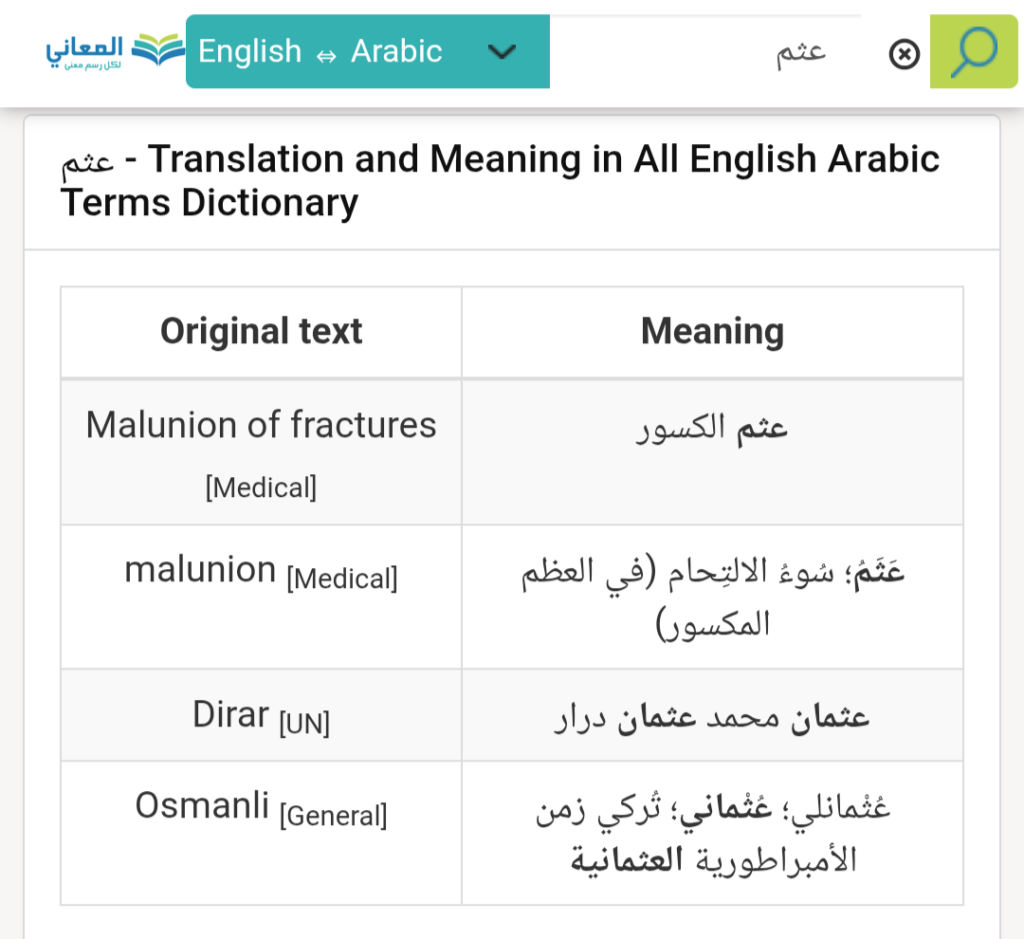
Malunion of fractures [Medical]: عثم الكسور. malunion [Medical] : عَثَمُ؛ سُوءُ الالتِحام (في العظم المكسور). Dirar [UN]: عثمان محمد عثمان درار. Osmanli [General] : عُثْمانلي؛ عُثْماني؛ تُركي زمن الأمبراطورية العثمانية.
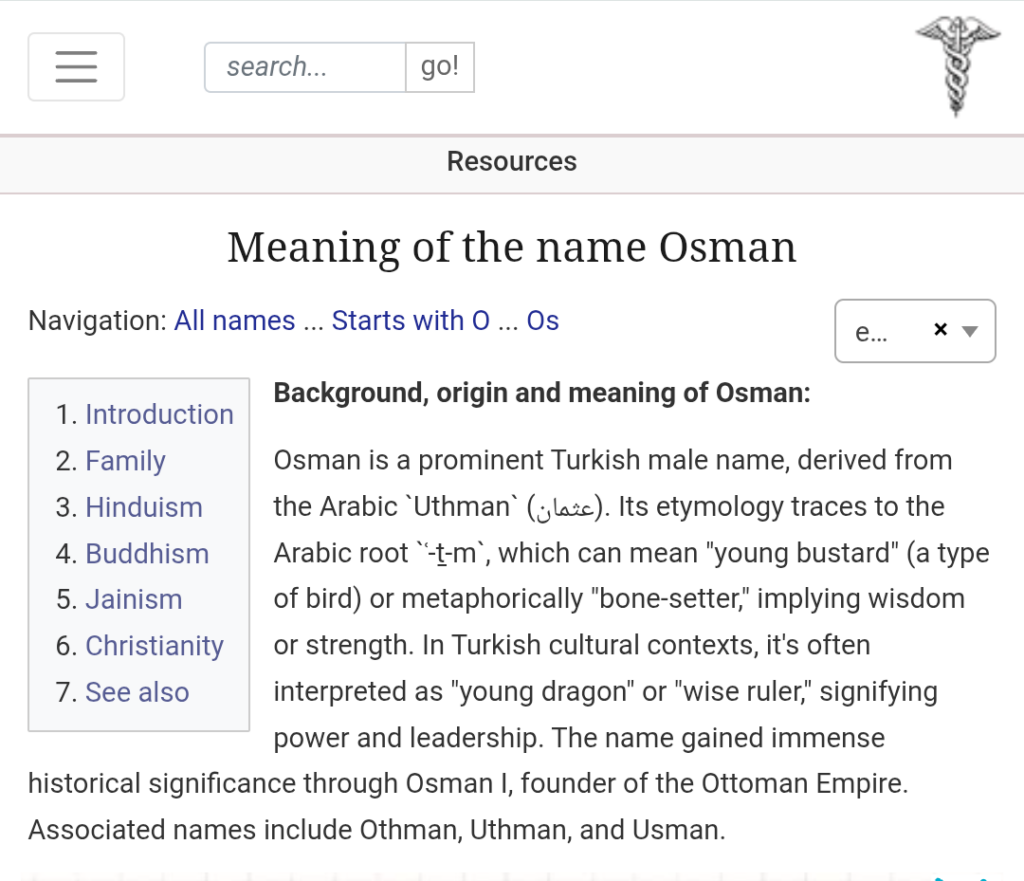
Osman is a prominent Turkish male name, derived from the Arabic `Uthman` (عثمان). Its etymology traces to the Arabic root `ʿ-ṯ-m`, which can mean “young bustard” (a type of bird) or metaphorically “bone-setter,” implying wisdom or strength. In Turkish cultural contexts, it’s often interpreted as “young dragon” or “wise ruler,” signifying power and leadership. The name gained immense historical significance through Osman I, founder of the Ottoman Empire. Associated names include Othman, Uthman, and Usman.
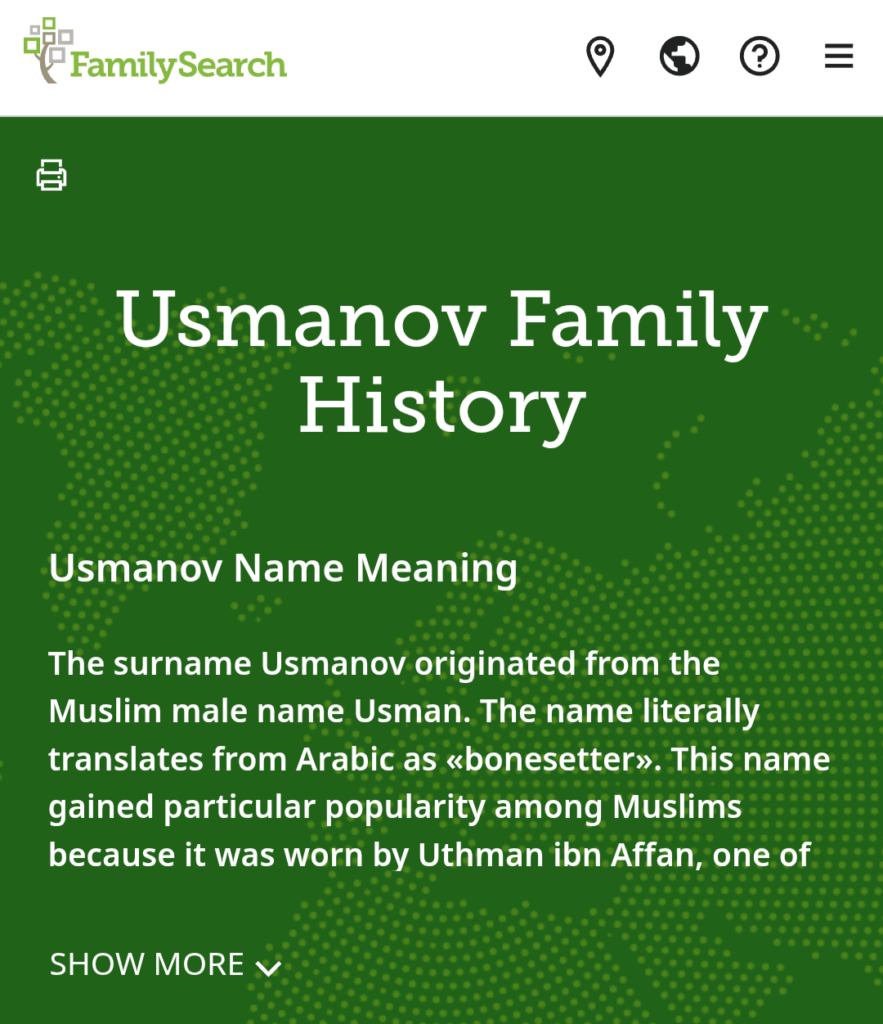
https://www.familysearch.org/en/surname?surname=usmanov
The Ottoman empire is named after a semi-legendary figure called ‘Uthmān, the alternative name of the Proto-Ottoman empire is Sultānat Ar-Rūm, they ruled over an area called Rumelia, this empire also unified many ethnicities and nations under one nation (Ummah) and one law, the law of Allah, until it was inevitably fractured and splintered into sects and divided nations.
Accordingly, this Seljuk state, which initially developed slowly in the shadow of the Danishmendite power, would in the end gather all the Turkish and Muslim territories of Asia Minor into one single, flourishing sultanate. This state too bore the name Rûm, if not officially, then at least in everyday usage, and its princes appear in the Eastern chronicles under the name “Seljuks of Rûm’ (Ar.: Salâjika ar-Rûm).
https://books.google.co.uk/books?id=FQwukvsKY-AC&pg=PA81&redir_esc=y#v=onepage&q&f=false
And ‘Umar is just based on the idea that the root ‘amr is used in the Qur’an, and that it’s said that he was involved in the transmission of Ḥafṣ, and in placing the Qur’an over fabrications by banning and burning fabrications like ‘Uthman did later. The transmission of the Qur’an from ‘Umar, ‘Uthmān, ‘Aṣim and Ḥafṣ is largely but not entirely symbolical, these names are anthropomorphised into these Bedouin characters, ones that are ravaging militant mercenary indisciplined war lords as described in the ahadith, whereas the companions (Anṣār and Muḥājirūn) are portrayed differently in the Qur’an.
‘Amr root used in the Qur’an
The real Ottomans were Romans, Romans of the Qur’an (Surah Ar-Rūm). Yaqut Al Hamawi was a Byzantium (Roman) Muslim.
Yaqut Ar-Rūmī:
Yāqūt Shihāb al-Dīn[1] ibn-ʿAbdullāh al-Rūmī al-Ḥamawī (1179–1229) (Arabic: ياقوت الحموي الرومي) was a Muslim scholar of Byzantine ancestry[2] active during the late Abbasid period (12th–13th centuries). He is known for his Mu’jam ul-Buldān, an influential work on geography containing valuable information pertaining to biography, history and literature as well as geography.[3][4] https://en.m.wikipedia.org/wiki/Yaqut_al-Hamawi
The Turkic Muslims from the North East were the Tartarians, with distant relation to these Romans, they both believed in a variant story of the Al Kalb protector story (Surah Al Kahf, the dog that was with the Sleepers of the Cave), though in their variants, Al Kalb is a female, although the masculine form of words in Qur’an can imply neutrality, so it’s possible that the Wolf was really a She-Wolf, though the Qur’an would specify that, it’s possible that there were two dogs or two wolves, as Allah creates everything in pairs, and that the Romans and Oghuz Turks only simply spoke about the female one, interestingly the Qur’an does mention a specific word for wolf which is Adh-Dheeb, either way the parallels between the “Romans” and “Turks” are evidence, the Greco-Roman descent people and the Anatolian Turks usually dispute against each other in a false race-war based on distortions and falsehoods of the modern-era and misinformation, despite their drastic similarities.
Roman myth held that their city was founded by Romulus, son of the war god Mars and the Vestal virgin Rhea Silvia, fallen princess of Alba Longa and descendant of Aeneas of Troy. Exposed on the Tiber river, Romulus and his twin Remus were suckled by a she-wolf at the Lupercal before being raised by the shepherd Faustulus, taking revenge on their usurping great-uncle Amulius, and restoring Alba Longa to their grandfather Numitor.
Asena is the name of a she-wolf associated with the Göktürks’ foundation myth.[1] According to the myth, the ancestress of the Göktürks was a she-wolf, mentioned, yet unnamed in two different “Wolf Tales”.[2] The legend of Asena tells of a young boy who survived a battle; a female wolf finds the injured child and nurses him back to health.
Dilemma of parallels to Oral traditions of other religions
What comes to Indians came from their gods, as per their own claim, they uphold the same science as transmission, following that science of transmission will result in the religion equally clashing with theirs, and would have to believe theirs too but then are stuck in a catch-22 situation, because the same science of transmission used to affirm that the Qur’an and Ahadith were orally transmitted from the Messenger through a chain of trustworthy narrators can also be used to affirm that there is a Trimurti, and of course to believe in Trimurti by consistently using this science of transmission for their religion too, would result in going against Allah by associating partners with Him, therefore cannot consistently use this science of transmission without strongly committing shirk, but also can’t be inconsistent, or become a munafiq (hypocrite) by doing so, hence trapped in a dilemma.
Ahadith are as authentic and trustworthy as Hindu narrations recorded from their Rishis in their scriptures, with both relying on chains of narrators (Muhaditheen and Rishis) to establish their credibility.The methodology of authentication for both Ahadith and Hindu scriptures involves the use of chains of narrators, where the credibility of the narrative is established through the tracing of its origin back to a prime source with chains of narrators such as Muhaditheen and Rishis.
This methodology, however, is not without its limitations. The reliance on human narrators, who are prone to errors and biases, raises concerns about the accuracy and reliability of the narrative. The potential for distortions, manipulations, or fabrications is ever-present, and the passage of time only increases the likelihood of such occurrences. Furthermore, the use of chains of narrators is a fragile thread that links the present to the past, and the credibility of each individual narrator is crucial to the authenticity of the narrative.
The fact that Hadiths and Hindu scriptures share a similar methodology of authentication raises questions about the double standard applied to these texts. If Muslims accept the authenticity of Hadiths based on their chains of narrators (Muhaditheen), it is difficult to justify rejecting the authenticity of Hindu scriptures (based on oral traditions from their Rishis), which are authenticated using a similar approach. This inconsistency necessitates the need for a more nuanced and critical examination on the methodology of authentication used for these texts.
The Qur’an emphasizes the importance of verifying information and not following blindly (Surah 17:36, Surah 25:1). This principle should be applied to the authentication of Hadiths, recognizing that the methodology used to verify their authenticity is not unique to Islam and is shared with other traditions, such as Hinduism. A critical evaluation of the authentication methodology would reveal that it is based on a fragile foundation, susceptible to errors and biases. This is another reason no one should believe in “oral transmission” and “oral preservation” narrative for the existence of the Qur’an.
Ahadith contradicting against Ahadith claim of Oral preservation.
Oral preservation by humans is impossible even according to their own books as per the following Ahadith from their own books, emphasizing that humans are more forgetful than animals and that even the Messenger would forget verses and would be reminded of them when hearing someone recite them from the Qur’an.
Hadith 1
Sahih al-Bukhari 4987
…`Uthman returned the original manuscripts to Hafsa. `Uthman sent to every Muslim province one copy of what they had copied, and ordered that all the other Qur’anic materials, whether written in fragmentary manuscripts or whole copies, be burnt.
صحيح البخاري ٤٩٨٧ …عُثْمَانُ الصُّحُفَ إِلَى حَفْصَةَ وَأَرْسَلَ إِلَى كُلِّ أُفُقٍ بِمُصْحَفٍ مِمَّا نَسَخُوا وَأَمَرَ بِمَا سِوَاهُ مِنَ الْقُرْآنِ فِي كُلِّ صَحِيفَةٍ أَوْ مُصْحَفٍ أَنْ يُحْرَقَ.
Hadith 2
Mishkat al-Masabih 2109
‘Uthmān reported God’s messenger as saying, “The best among you is he who learns and teaches the Qur’ān.”
عَنْ عُثْمَانَ رَضِيَ اللَّهُ عَنْهُ قَالَ: قَالَ رَسُولُ اللَّهِ صَلَّى اللَّهُ عَلَيْهِ وَسَلَّمَ: «خَيْرُكُمْ من تعلم الْقُرْآن وَعلمه» . رَوَاهُ البُخَارِيّ
حكم : صَحِيح (الألباني)
Hadith 3
Sahih al-Bukhari 5038
Narrated Aisha:
Allah’s Messenger (ﷺ) heard a man reciting the Qur’an at night, and said, “May Allah bestow His Mercy on him, as he has reminded me of such-and-such Verses of such-and-such Suras, which I was caused to forget.”
حَدَّثَنَا أَحْمَدُ بْنُ أَبِي رَجَاءٍ، حَدَّثَنَا أَبُو أُسَامَةَ، عَنْ هِشَامِ بْنِ عُرْوَةَ، عَنْ أَبِيهِ، عَنْ عَائِشَةَ، قَالَتْ سَمِعَ رَسُولُ اللَّهِ صلى الله عليه وسلم رَجُلاً يَقْرَأُ فِي سُورَةٍ بِاللَّيْلِ فَقَالَ “ يَرْحَمُهُ اللَّهُ لَقَدْ أَذْكَرَنِي كَذَا وَكَذَا آيَةً كُنْتُ أُنْسِيتُهَا مِنْ سُورَةِ كَذَا وَكَذَا ”.
Hadith 4
Mishkat al-Masabih 2188
Ibn Mas’ūd reported God’s messenger as saying, “It is wrong for one to say that he has forgotten such and such a verse, for he has been made to forget. Study the Qur’ān, for it is more apt to escape from men’s minds than animals.”
(Bukhārī and Muslim, Muslim adding “which are tethered”.)
وَعَنِ ابْنِ مَسْعُودٍ قَالَ: قَالَ رَسُولُ اللَّهِ صَلَّى اللَّهُ عَلَيْهِ وَسلم: ” بئس مالأحدهم أَنْ يَقُولَ: نَسِيتُ آيَةَ كَيْتَ وَكَيْتَ بَلْ نُسِّيَ وَاسْتَذْكِرُوا الْقُرْآنَ فَإِنَّهُ أَشَدُّ تَفَصِّيًا مِنْ صُدُورِ الرِّجَالِ مِنَ النَّعَمِ “. مُتَّفَقٌ عَلَيْهِ. وَزَادَ مُسلم: «بعقلها»
حكم : مُتَّفَقٌ عَلَيْهِ (الألباني)
Hadith 5
Sunan Abi Dawud 3970
Narrated A’ishah: A man got up (for prayer) at night, he read the Qur’an and raised his voice in reading. When the morning came, the Messenger of Allah (ﷺ) said: May Allah have mercy on so-and-so! Last night he reminded me a number of verses which I was about to forget.
حَدَّثَنَا مُوسَى، – يَعْنِي ابْنَ إِسْمَاعِيلَ – حَدَّثَنَا حَمَّادٌ، عَنْ هِشَامِ بْنِ عُرْوَةَ، عَنْ عُرْوَةَ، عَنْ عَائِشَةَ، رضى الله عنها أَنَّ رَجُلاً، قَامَ مِنَ اللَّيْلِ فَقَرَأَ فَرَفَعَ صَوْتَهُ بِالْقُرْآنِ فَلَمَّا أَصْبَحَ قَالَ رَسُولُ اللَّهِ صلى الله عليه وسلم “ يَرْحَمُ اللَّهُ فُلاَنًا كَائِنٌ مِنْ آيَةٍ أَذْكَرَنِيهَا اللَّيْلَةَ كُنْتُ قَدْ أَسْقَطْتُهَا ” .
Grade: Sahih (Al-Albani)
حكم : صحيح (الألباني)
Hadith 6
Sunan an-Nasa’i 943
It was narrated from Abdullah that:The Prophet (ﷺ) said: “It is not right for any one of you to say: ‘I have forgotten such and such a verse.’ Rather, he has been caused to forget. Study the Qur’an, for it escapes from the heart of man faster than a camel escapes from its fetter. “
أَخْبَرَنَا عِمْرَانُ بْنُ مُوسَى، قَالَ حَدَّثَنَا يَزِيدُ بْنُ زُرَيْعٍ، قَالَ حَدَّثَنَا شُعْبَةُ، عَنْ مَنْصُورٍ، عَنْ أَبِي وَائِلٍ، عَنْ عَبْدِ اللَّهِ، عَنِ النَّبِيِّ صلى الله عليه وسلم قَالَ “ بِئْسَمَا لأَحَدِهِمْ أَنْ يَقُولَ نَسِيتُ آيَةَ كَيْتَ وَكَيْتَ بَلْ هُوَ نُسِّيَ اسْتَذْكِرُوا الْقُرْآنَ فَإِنَّهُ أَسْرَعُ تَفَصِّيًا مِنْ صُدُورِ الرِّجَالِ مِنَ النَّعَمِ مِنْ عُقُلِهِ ”.
Grade: Sahih (Darussalam)
Comparitive study proving Ḥafṣ ‘an ‘Āsim
Many reformists may suggest that one could mix the best possible variants from each Qira’at to make one unified Qira’ah (i.e. Qur’an), however, it would it be better to compare all the Qira’at too root out the original Qur’an, rather than just trying to merely “mix” them together to make a Qur’an, rather they may just end up with the Ḥafṣ one or Warsh one anyway, rather than a mixed one even by “mixing”, thus going in a circle coming back to the same point but with more knowledge that the Ḥafṣ or Warsh or which over other is the correct one without replacing anything in the exist one that is chosen. Hypothetically, Ḥafṣ is likely the one to come out 100% as the accurate Qur’an without any mixings and amendments to it. A “mixed” reconstruction of the Qur’an would just collapse back into Ḥafṣ, irregardless of it containing a minority reading of a verse over-shadowed by a majority reading that’s in more Qira’at, as it’s likely the minority reading only found in Ḥafṣ for said verse is contextually superior. The following is a studying comparing Ḥafṣ and other variant copies.
Surah Al Fatihah 1:4
Ḥafṣ – مٰلِكِ يَوْمِ ٱلدِّيْنِ (Maaliki Yawm Ad-Deen)
Warsh – مَلِكِ يَوْمِ ٱلدِّيْنِ (Maliki Yawm Ad-Deen)
Traditionalists argue that those who follow Qur’an Alone don’t know whether it’s Maalik in Ḥafṣ or Malik in Warsh, since they reject every Ahadith including the ones that claim all the variants are from Allah. However, we can determine which one is correct, in fact, we can determine how Ḥafṣ is the correct one, and how Warsh is contradictory, even just by using Warsh, by using Tasreef method by cross-referencing other verses in Warsh to see where Yawm/Al-Yawm and/or Ad-Deen is used and whether it’s Maalik used with them or Malik, and if it’s the former, then Ḥafṣ is the correct one, and Warsh is contradictory as it says Malik in one verse in relation to Yawm and Maalik in another verse in relation to Yawm.
The usage of Maalik suggests that Maalik is specifically when speaking of Al-Yawm.
The following three verses that are the same in both Ḥafṣ and Warsh, not varying, mention Yawm, Deen and Maalik in relation to Al-Mulk (The Dominion) in the same context/narrative, three verses which mustn’t be divided.
Warsh 3:24-26
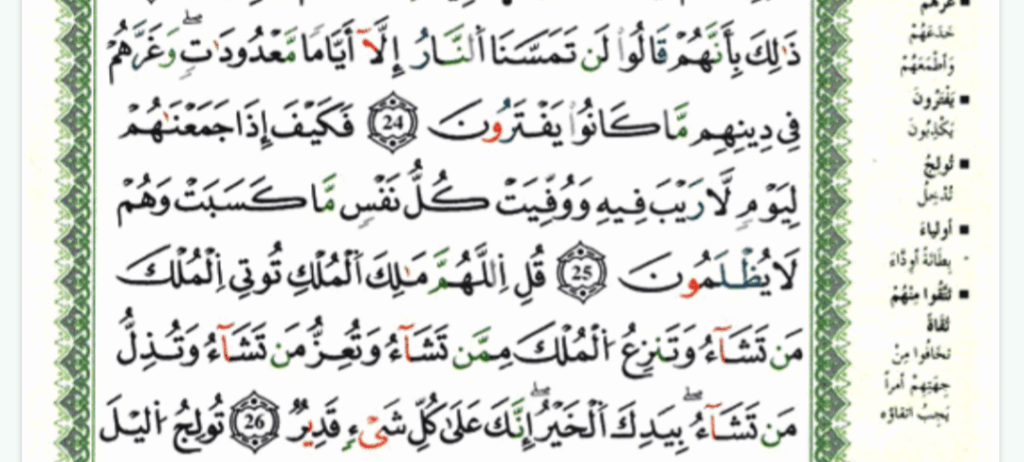
source: https://easyquran.com/en/recite-the-tajweed-quran-in-warsh-an-nafi-narration/#53
The word used here is Maalik (مٰلِك) and not Malik (مَلِكِ), along with the words Yawm (يَوْم), Deen (دِين) and Mulk (مُلْك).
These verses are the same in Ḥafṣ as follows, no difference, with Maalik used.
القرءان سورة ءال عمران 26-24
ذَٰلِكَ بِأَنَّهُمْ قَالُوا۟ لَن تَمَسَّنَا ٱلنَّارُ إِلَّآ أَيَّامًا مَّعْدُودَٰتٍ وَغَرَّهُمْ فِى دِينِهِم مَّا كَانُوا۟ يَفْتَرُونَ فَكَيْفَ إِذَا جَمَعْنَـٰهُمْ لِيَوْمٍ لَّا رَيْبَ فِيهِ وَوُفِّيَتْ كُلُّ نَفْسٍ مَّا كَسَبَتْ وَهُمْ لَا يُظْلَمُونَ قُلِ ٱللَّـهُمَّ مَـٰلِكَ ٱلْمُلْكِ تُؤْتِى ٱلْمُلْكَ مَن تَشَآءُ وَتَنزِعُ ٱلْمُلْكَ مِمَّن تَشَآءُ وَتُعِزُّ مَن تَشَآءُ وَتُذِلُّ مَن تَشَآءُ بِيَدِكَ ٱلْخَيْرُ إِنَّكَ عَلَىٰ كُلِّ شَىْءٍ قَدِيرٌ
The following verse 6:73 relates Mulk with Yawm.
القرءان سورة الأنعام 73
وَهُوَ ٱلَّذِى خَلَقَ ٱلسَّمَـٰوَٰتِ وَٱلْأَرْضَ بِٱلْحَقِّ وَيَوْمَ يَقُولُ كُن فَيَكُونُ قَوْلُهُ ٱلْحَقُّ وَلَهُ ٱلْمُلْكُ يَوْمَ يُنفَخُ فِى ٱلصُّورِ عَـٰلِمُ ٱلْغَيْبِ وَٱلشَّهَـٰدَةِ وَهُوَ ٱلْحَكِيمُ ٱلْخَبِيرُ
• Saheeh International
And it is He who created the heavens and earth in truth. And the day He says, “Be,” and it is, His word is the truth. And His is the Dominion (Mulk) [on] the Day (Yawm) the Horn is blown. [He is] Knower of the unseen and the witnessed; and He is the Wise, the Acquainted. (Qur’an 6:73)
This confirms that Warsh contradicts itself as it says Malik in verse 1:4 and in verse 3:26 it says Maalik in relation to Yawm Ad-Deen, yet also affirms that Ḥafṣ with Maalik in 1:4 is correct, since it matches the context of verses 3:24-26 and 6:73, even in Warsh in those 3 verses 3:24-26.
Surah ’Āl ‘Imrān 3:146
The difference between Ḥafṣ and Warsh regarding this verse is that Ḥafṣ says Qātala and Warsh says Qutila instead. So which is the correct one? Well that can be determined based on the verb form and on other words in the same verse, whether they are active or passive. First and foremost, the traditional argument is that قُتِلَ (qutila) means killed and قَاتَلَ (qātala) means fought, however it does not take into account that qutila and qātala have the same root and thus the same root definition, and only the verb form differs between the two.
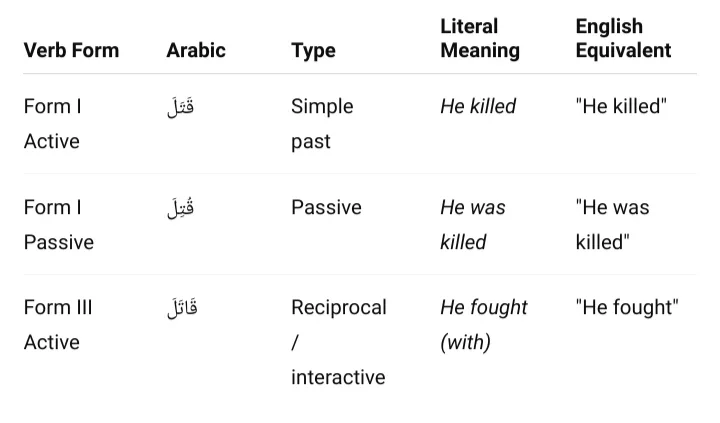
Root: ق-ت-ل (Q-T-L) is the shared root between قَاتَلَ (Qātala) and قُتِلَ (Qutila), which conveys the general idea of killing, fighting or combat. This implies that both forms involve a scenario related to fighting, conflict, or death, therefore the semantic field remains the same, however death in the context of the Qur’an doesn’t exclusively imply physical death but can also mean an ego death i.e. the death/sacrifice of an inflated/heavy ego to cleanse the soul.
The word قُتِلَ (Qutila) is a third-person singular passive past (perfect) form I verb.
https://en.m.wiktionary.org/wiki/%D9%82%D8%AA%D9%84
The 3rd person perfect past (perfect) passive form I verb is formed using “had been” + past (perfect) participle. For example, “He/She/It had been invited” or “They had been invited”.
Past Perfect: Indicates the action completed before another action in the past. It’s formed with “had” + past participle.
Passive Voice: The referenced subject receives the action, rather than performing it. It’s formed with a past tense form of “be” + past participle.
Third Person: Refers to “he,” “she,” “it,” or “they.”
So according to this, if the correct word in 3:146 is supposed to be قُتِلَ (qutila), then it’s saying the Nabi had been killed while the Ribbiyyūn were alongside with him, which doesn’t make sense, as this contradicts the fact that Allah refers to them all as the patient ones (ٱلصَّـٰبِرِينَ) in the sense that they are still alive in the narrative given in the verse, since the word ٱلصَّـٰبِرِينَ (As-Sābirīna) is in the active form, قَـٰتَلَ (Qātala) would actually fit better since that is also in the active form with the Nabi as active agent and Ribbiyyūn actively alongside him.
Using قُتِلَ (Qutila) also contradicts 3:144 as it poses a rhetorical question for the deserters with the potentiality that if the Nabi did die or had been killed, will they turn back on their heels i.e. desert after he has died or has been killed, also the word قُتِلَ (qutila) is used here and it’s interpreted in the proper manner that the subject mentioned is the receiver and not the doer with this past perfect passive third person participle, while in 3:146 it’s usually translated improperly when it’s used in place of قَـٰتَلَ (qātala) in the Warsh reading, also, the rhetorical question in 3:144 posits the question for if he is killed, basically negating the idea that he has been killed, and 3:145 also contradicts the usage of قُتِلَ (qutila) in 3:146, as the verse affirm that only can Allah can cause the soul to die when he wills, then the next verse 3:146 is actually continued by the prefixed presumption participle of وَ “wa” (and) and not ثُمَّ “thuma” (then).
Those traditionalists who promote belief in “7 Aḥrūf” disingenuously interpret both with the Nabi as the acter, and presume that it’s the meaning that is different between two words, when it’s clearly not because the root is the same, the semantic field is the same, the difference is in how the participle is used with the subject, and in terms of spiritual context there is not much difference between the two words “fighting” and “killing” as they are both synonymous to “defeating” as in defeating evil.
The problem is that whether the Nabi is the acter (qātala) or the receiver (qutila), the traditionalists decide, the traditionalist presumes there’s a difference in the meaning, but there isn’t, it’s rather the difference in how the participle is used with the main subject, if the subject is the acter or the receiver.
If the root meaning is “fight”, then is it:
1) He fought with (qātala ma’ahu)
OR
2) He has been fought, with (qutila ma’ahu)
If the root meaning is “kill”, then is it:
1) He killed (qātala)
OR
2) He has been killed (qutila)
The core definition itself doesn’t matter in regards to the verbal difference between qutila and qātala , but who it applies to does matter.
The verb قَـٰتَلَ (Qātala) fits verse 3:146, as it’s a reciprocal action, that the Nabi is actively as the subject participating as the doer, and this action shared with plurality of other subjects, the Ribbiyūn who are companions in fighting, but not the primary subject, also Qātala fits with the context of the ٱلصَّـٰبِرِينَ (As-Sābirīna) – inclusive of the active subject (the Nabi) and his participants (Ribbiyyūn) – which is also an accusative masculine active participle used as a noun inclusive of Nabi and ٱلصَّـٰبِرِينَ (As-Sābirīna).