Geographical, Geological, Natural, Social and Theological evidence that the place in Saudi is not the Qur’anic Makkah but fake Makkah. This is split into 5 elements with arguments based on each of the 5 listed evidence types.
The Qur‘an says that the Qur‘an/Kitab was sent down [to the Prophet] to warn the Mother of Towns in verses 6:92 and 42:7, the phrase used for the Mother of Towns is “Umm ul Qura”, the phrase “Qura” means Towns, this phrase is also used elsewhere in the Quran, to refer to Towns that were destroyed by God.
The term Qura is used in verse 46:27 which says that God destroyed the Towns (Qura) surrounding the people [who are being warned in Umm ul Qura the Mother of Towns], implying that the towns are in the same locale as Umm ul Qura, 6 verses prior to this, 46:21 talks about the brother of ‘Ād being sent to Al Aḥqāf.
The same term Qura is used in verse 18:59 which says those Towns were destroyed, 18:56 mentions the Mursaleen, Prophet Lut was one of the Mursaleen as stated in 37:133.
The term Qura is also used in verse 7:96, the entire theme from verse 7:65 to verse 7:102 demonstrates that the towns this verse is referring to are the towns of ‘Ād (which is the Iram of the Pillars which verses 89:6-8 say was destroyed), Thamūd (who were successors after ‘Ād), Lūt (who’s people intended to drive him out of the Town (Qarya, singular form of Qura Towns) and Madyan.
In the Quran, verse 37:137-138, says the People [from Umm ul Qura who the Quran is sent to as a warning] pass by them (Qom e Lūt i.e. the ruins of their town/s) in the morning, and pass by them at night, this implies the ruins are close by to Umm ul Qura, however, there are no such ruins near the Makkah of Hijaz.
Verse 7:85 says that the Prophet Shu‘ayb was sent to Madyan, one of the Towns surround Umm ul Qura, seized/destroyed by God, and verses 26:175-176 discuss Prophet Shu‘ayb’s interaction with People of the Woods (As’habul Aykah), most take “People of the Woods” to be to People of Madyan, as indicated by the fact that Prophet Shu‘ayb is mentioned in both sets of verses, this would imply that the Town of Madyan is in a Forest, meaning that Umm ul Qura is in the same locale as a Forest, however, there are no Forests near the Makkah of Saudi.
Regarding Iram of the Pillars, there are no ruins of Iram of the Pillars near Makkah of Saudi either. The Saudi Makkah isn’t surrounded by any of the Towns in the same locale that are mentioned in the Quran.
This Holistic referencing refutes the notion that the “Makkah” in Saudi is the Umm ul Qura mentioned in the Quran that received the Quran as a warning to its people talking about Towns surrounding it which rejected Emissaries, Messengers and Prophets before and were destroyed as a result.
First and foremost, the real Al Masjid Al Haram and Bakka city are described as a secure and safe place in the Qur’an many times.
Qur’an 2:126 – And [mention] when Abraham said, “My Lord, make this a secure city and provide its people with fruits – whoever of them believes in Allah and the Last Day.” [Allah] said. “And whoever disbelieves – I will grant him enjoyment for a little; then I will force him to the punishment of the Fire, and wretched is the destination.”
Qur’an 3:97 – In it are clear signs [such as] the standing place of Abraham. And whoever enters it shall be safe. And [due] to Allah from the people is a pilgrimage to the House – for whoever is able to find thereto a way. But whoever disbelieves – then indeed, Allah is free from need of the worlds.
Qur’an 9:28 – O you who have believed, indeed the polytheists are unclean, so let them not approach al-Masjid al-Haram after this, their [final] year. And if you fear privation, Allah will enrich you from His bounty if He wills. Indeed, Allah is Knowing and Wise.
Qur’an 14:35 – And [mention, O Muhammad], when Abraham said, “My Lord, make this city [Makkah] secure and keep me and my sons away from worshipping idols.
Qur’an 44:51 – Indeed, the righteous will be in a secure place;
Qur’an 48:24 – And it is He who withheld their hands from you and your hands from them within [the area of] Makkah after He caused you to overcome them. And ever is Allah of what you do, Seeing.
3:97 – safe maqam
2:126 – secure land
14:35 – land secure
44:51 – secure maqam
48:24 – believers are given victory in Makkah by Allah, becoming the sole rulers
9:28 – they are told to not allow mushrikeen to enter after the final year.
Is the place in Saudi really a safe place?
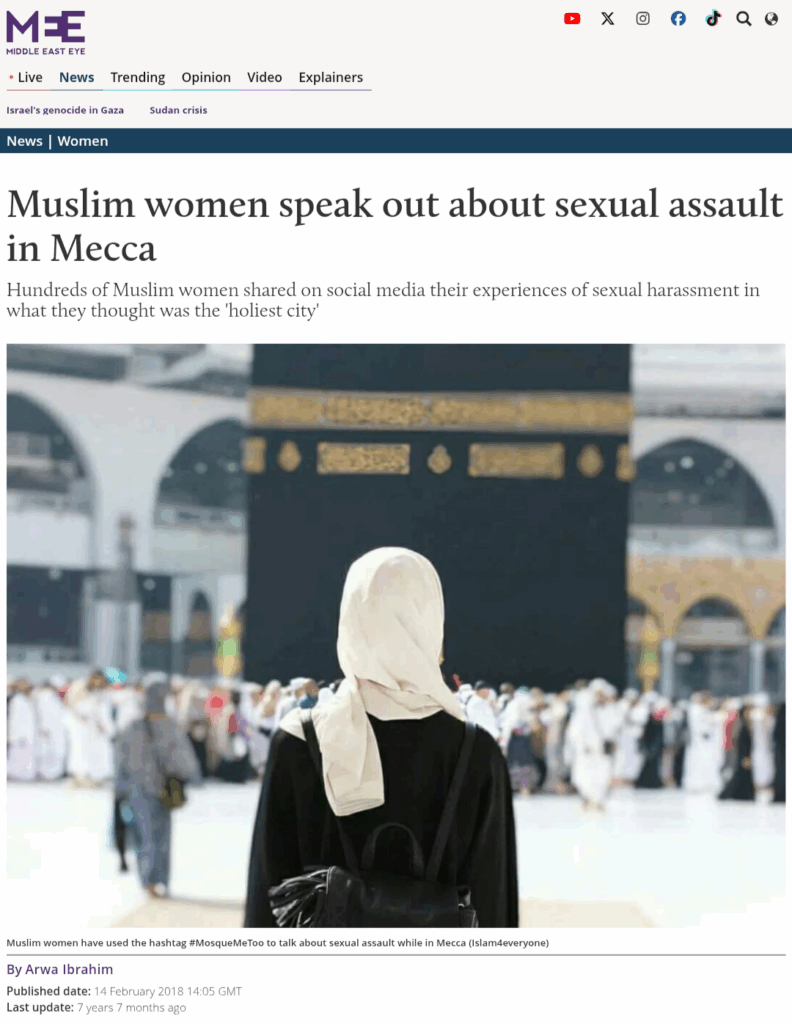
Muslim women speak out about sexual assault in Mecca
This article from Middle East Eye, a Muslim-majority News Company, indicates that the fake Makkah in Saudi is not safe for woman, and that many men there still have ill intentions despite believing they’re in the presence of “God’s Holy House”, the cognitive dissonance would be unimaginable, desperate men who can’t control themselves even when in a place that has religious sentimental value to them.
Literal stampedes of people, people dying in the stampedes, definitely not a safe place to be at due to stampedes.
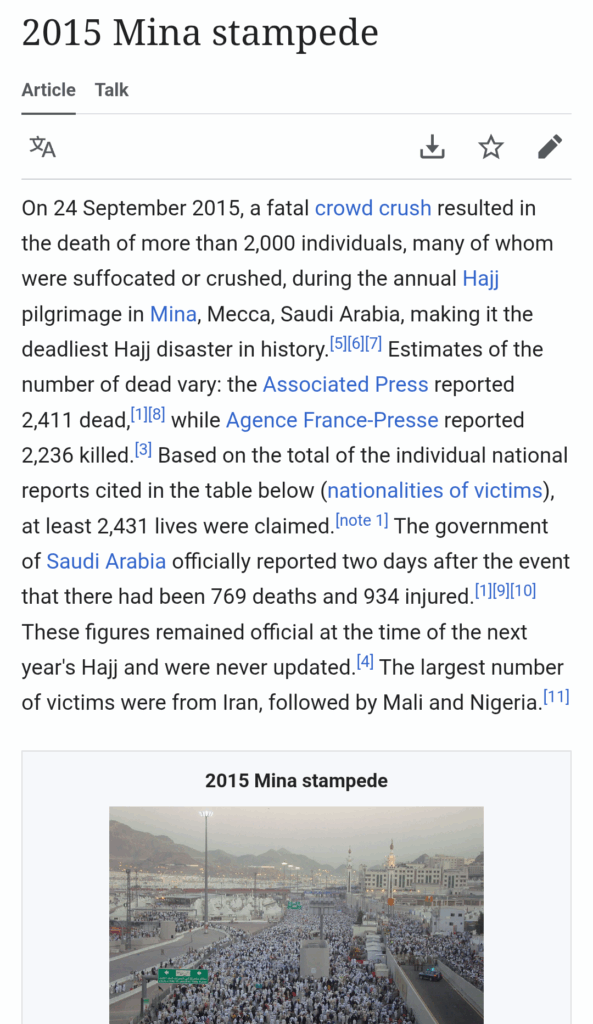
Note: Mina is an official part of their Fake Makkah, a stampede in Mina means a stampede in Fake Makkah.
These are the two Social issues which make it an unsafe place to be at, desperate people in stampede, and desperate men violating women, desperation is the problem, the problem that this Fake Makkah, it is like a magnet, but magnet for negativity, negative outcomes, like a flying bee getting attracted to a burning hot lightbulb thinking it’s pollen and then dying from the burn of bulb.
Natural disasters are the next major issue with this fake Makkah in Saudi Arabia. At least 1,301 people died there due to heat stroke in 2024.
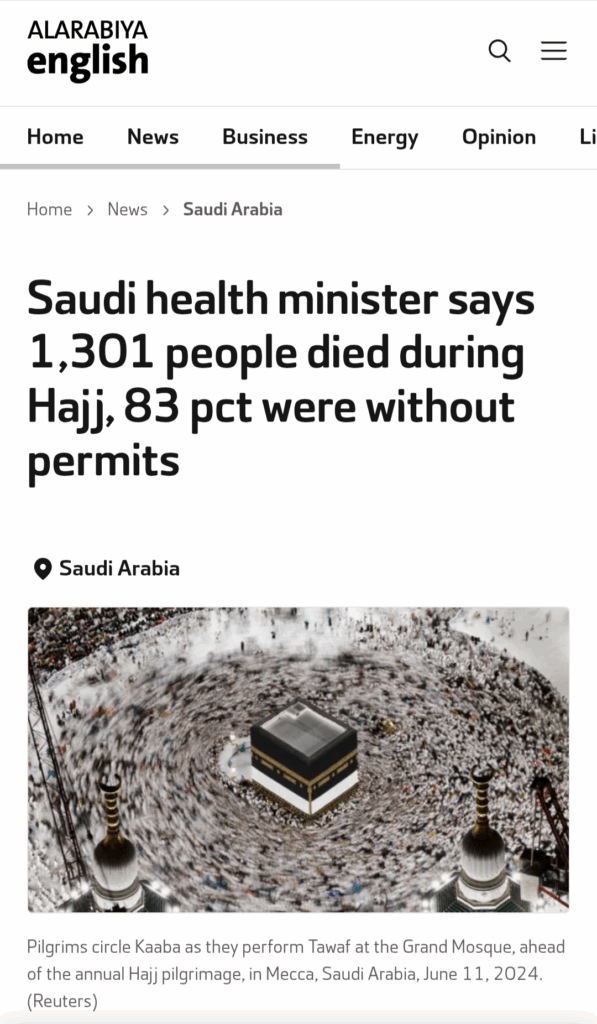
Saudi health minister says 1,301 people died during Hajj, 83 pct were without permits
2024 Hajj extreme heat disaster
Locust swarms and Floods also indicate that place is not safe.
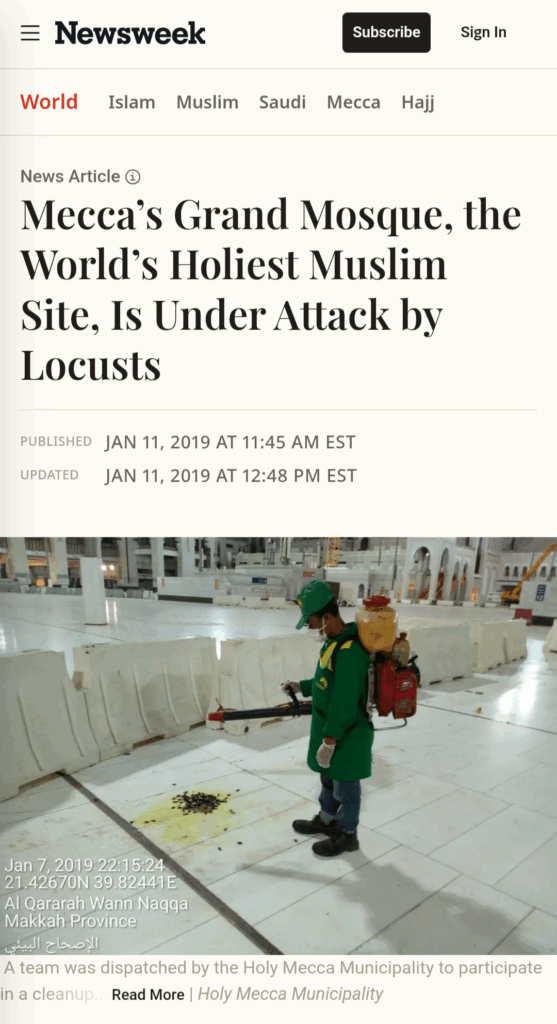
Mecca’s Grand Mosque, the World’s Holiest Muslim Site, Is Under Attack by Locusts
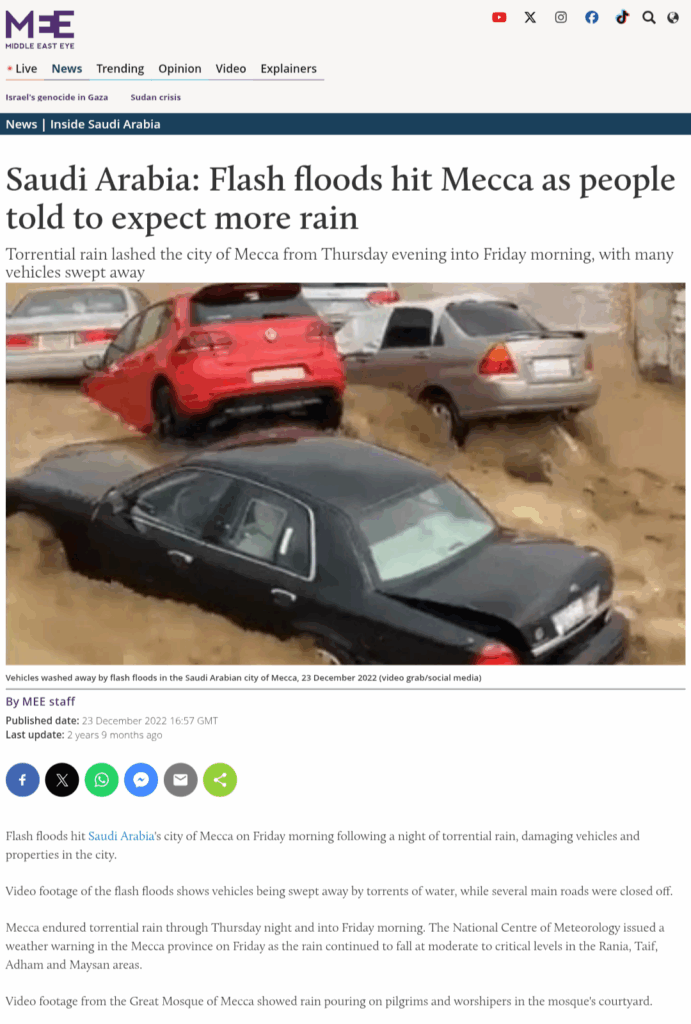
Saudi Arabia: Flash floods hit Mecca as people told to expect more rain
Image of Fake Makkah submerged in the flood of 1941
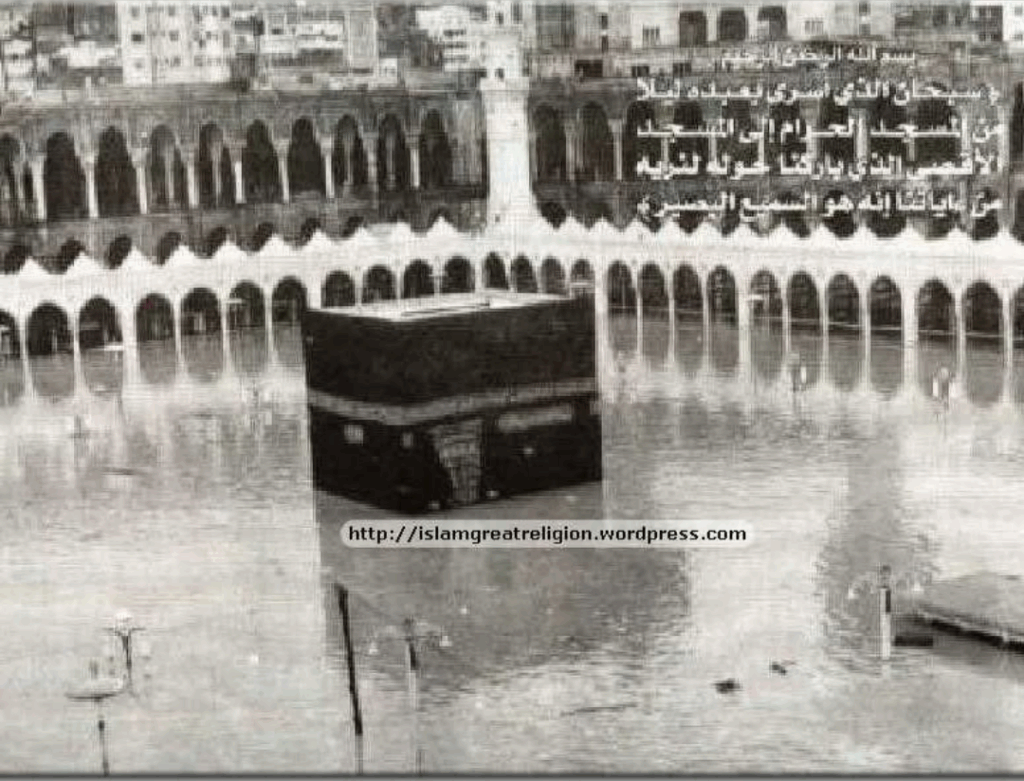
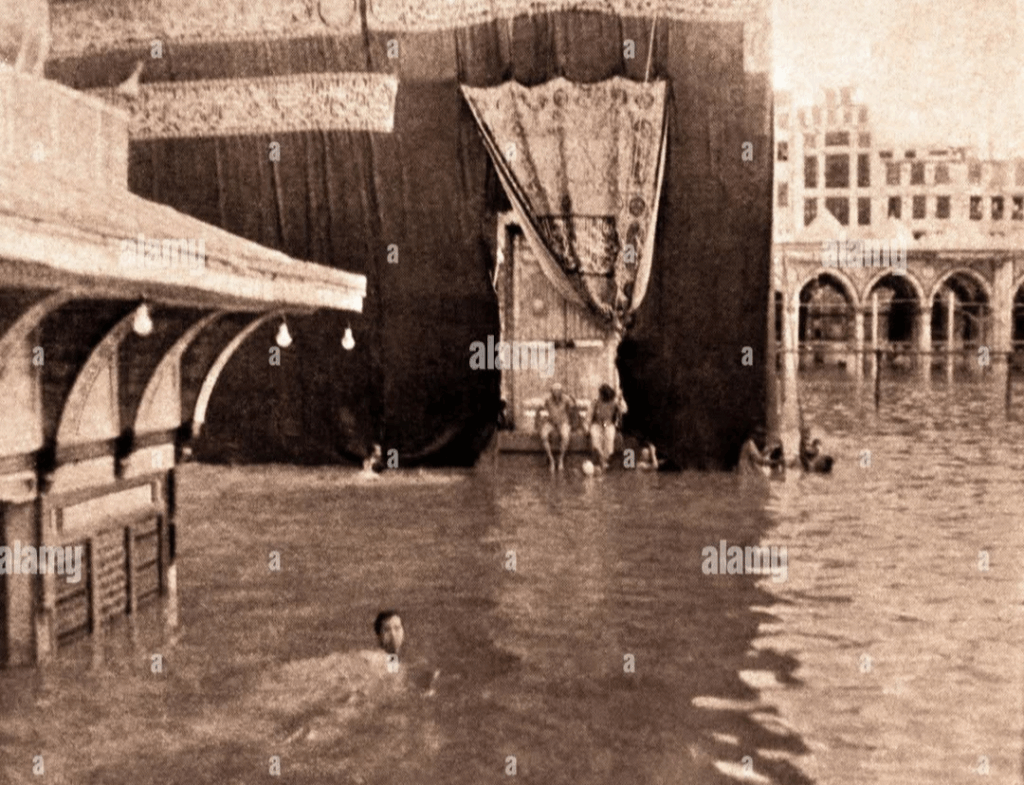
Where do we see this in the Qur’an? Fir’awn and his people were punished with a flood and a swarm of locusts
So We sent upon them the flood and locusts and lice and frogs and blood as distinct signs, but they were arrogant and were a criminal people. (Qur’an 7:133)
Kufri Clocktower hotel specifically being hit by the thunderbolt.
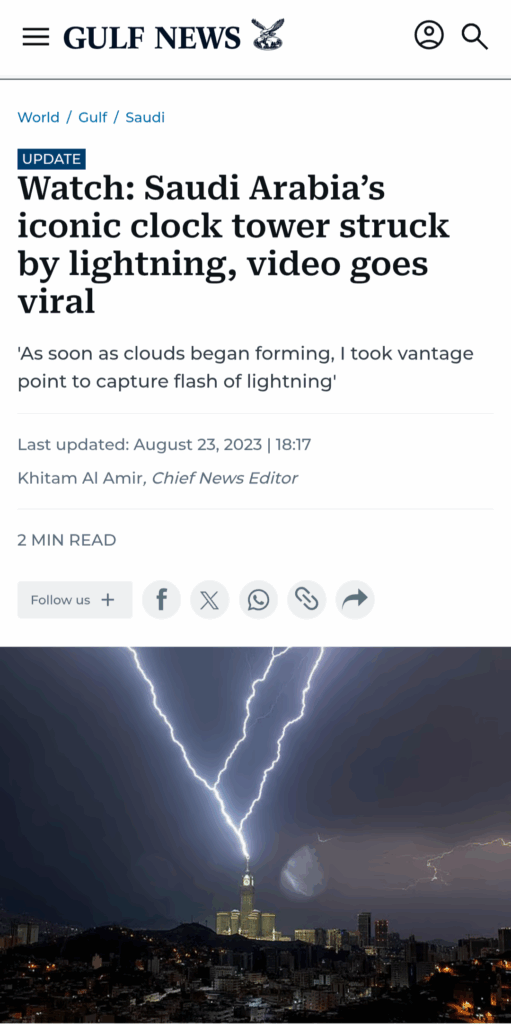
Watch: Saudi Arabia’s iconic clock tower struck by lightning, video goes viral
Where do we see thunderbolt in the Qur’an?
And as for Thamud, We guided them, but they preferred blindness over guidance, so the thunderbolt of humiliating punishment seized them for what they used to earn. (Qur’an 41:17)
So due to this, it’s an unsafe place, just like how Iram became unsafe.
If Allah wanted, the thunderbolt could destroy the clocktower, and the rest of Fake Makkah, and everyone there, this is merely just a warning to them, a sign that this isn’t the real Makkah, otherwise there wouldn’t be thunderbolts.
Sunnis, Shias and their scholars are Mushrikeen? Yes or no.
From what we know is the Sunnis and Shias derived their religious laws from other books besides the Qur’an, and the Sunnis and Shias are split into separate sects.
And We have revealed to you, [O Muhammad], the Book in truth, confirming that which preceded it of the Scripture and as a criterion over it. So judge between them by what Allah has revealed and do not follow their inclinations away from what has come to you of the truth. To each of you We prescribed a law and a method. Had Allah willed, He would have made you one nation [united in religion], but [He intended] to test you in what He has given you; so race to [all that is] good. To Allah is your return all together, and He will [then] inform you concerning that over which you used to differ. (Qur’an 5:48)
[Adhere to it], turning in repentance to Him, and fear Him and establish prayer and do not be of those who associate others with Allah: of those who have divided their religion and become sects, every faction rejoicing in what it has. (Qur’an 31:31-32)
And in their books, they believe that a black stone in their fake Ka’ba can expiate their sins upon touching it.
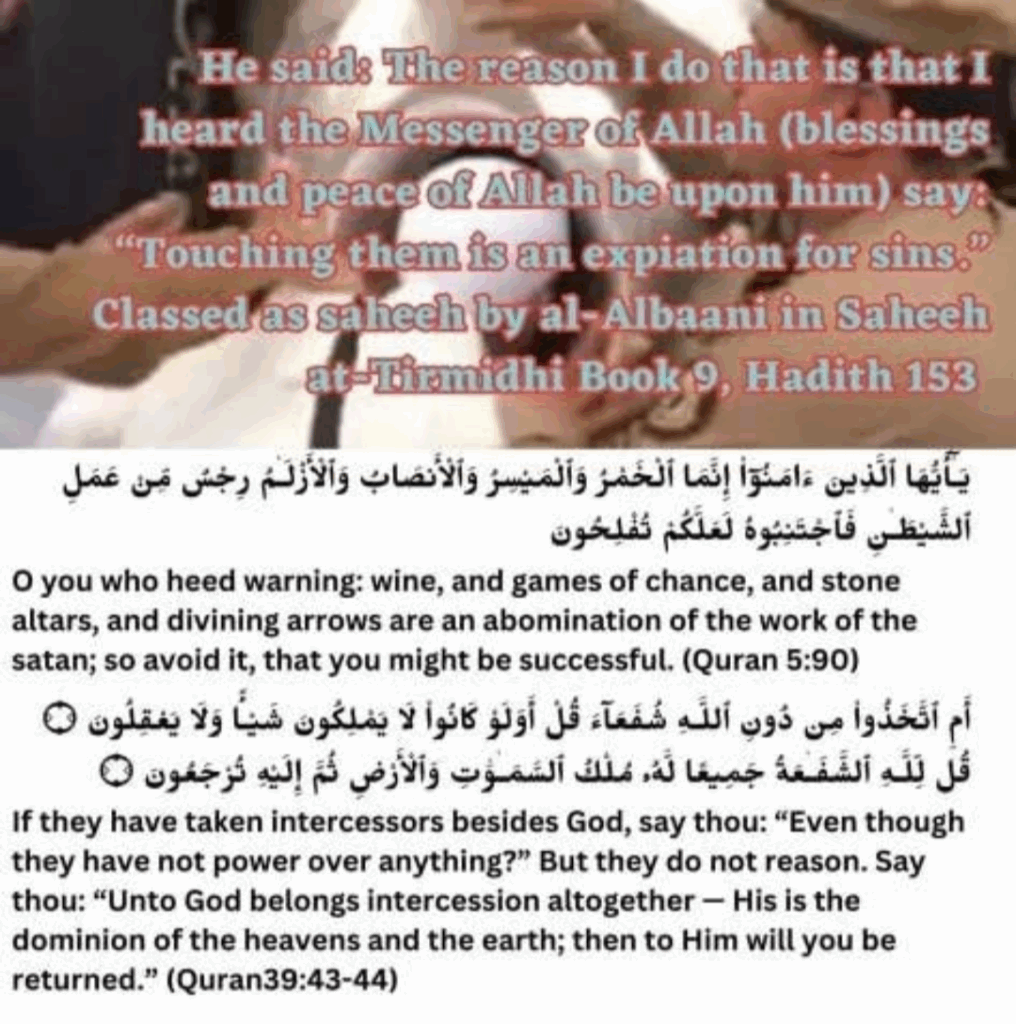
According to the following verses, the Mu’mineen won in the Basin of Makkah, and told to prohibit the polytheists (Mushrikeen) from ever entering.
And it is He who withheld their hands from you and your hands from them within [the area of] Makkah after He caused you to overcome them. And ever is Allah of what you do, Seeing. (Qur’an 48:24)
O you who have believed, indeed the polytheists are unclean, so let them not approach al-Masjid al-Haram after this, their [final] year. And if you fear privation, Allah will enrich you from His bounty if He wills. Indeed, Allah is Knowing and Wise. (9:28)
However, so if Mu’mineen won the battle and prohibited mushrikeen from ever entering, then why are there mushrikeen ruling over fake Makkah if it really is Makkah? A question especially for those who are Qur’an Alone that still believes that Makkah is where fake Makkah in Saudi Arabia is.
The geological issues as follows, since Makkah is described as a Batn as per 48:24, which by definition is a Basin, and is surrounded by two mountains, Safa and Marwa, that the people of Makkah circumnavigate inside of, as per 2:158, then how would this geological description fit the fake Makkah?
Indeed, as-Safa and al-Marwah are among the symbols of Allah. So whoever makes Hajj to the House or performs ‘umrah – there is no blame upon him for walking between them. And whoever volunteers good – then indeed, Allah is appreciative and Knowing. (Qur’an 2:158)
Bakkah is described as an uncultivated place, uncultivated doesn’t mean barren, people from other towns and villages from around it brought their produce to the city of Bakkah, as per 14:37.
Our Lord, I have settled some of my descendants in an uncultivated valley near Your sacred House, our Lord, that they may establish prayer. So make hearts among the people incline toward them and provide for them from the fruits that they might be grateful. (Qur’an 14:37)
Ghayri Dhi Dhar’in means uncultivated, it doesn’t mean plantless, what it means by uncultivated is that there’s no farmable lands inside the viciny, it doesn’t mean barrenness.
A زَرَعَ الأَرْضَ, (Mgh, Mṣb,) inf. n. زَرْعٌ, (Mṣb,) signifies [also] ‡ He ploughed up, or tilled, or cultivated, the land, or ground, for sowing. (Mgh, Mṣb.) Hence [the saying in a trad.], إِذَا زَرَعَتْ هٰذِهِ الأُمَّةُ نُزِعَ مِنْهَا النَّصْرُ ‡ When this nation shall employ itself altogether with agriculture and the affairs of the present world, and turn away from warring against unbelievers and the like, aid shall be withdrawn from it. (Mgh.) (Lane’s lesion)